
Memphis interiors
Furniture rhythm corner
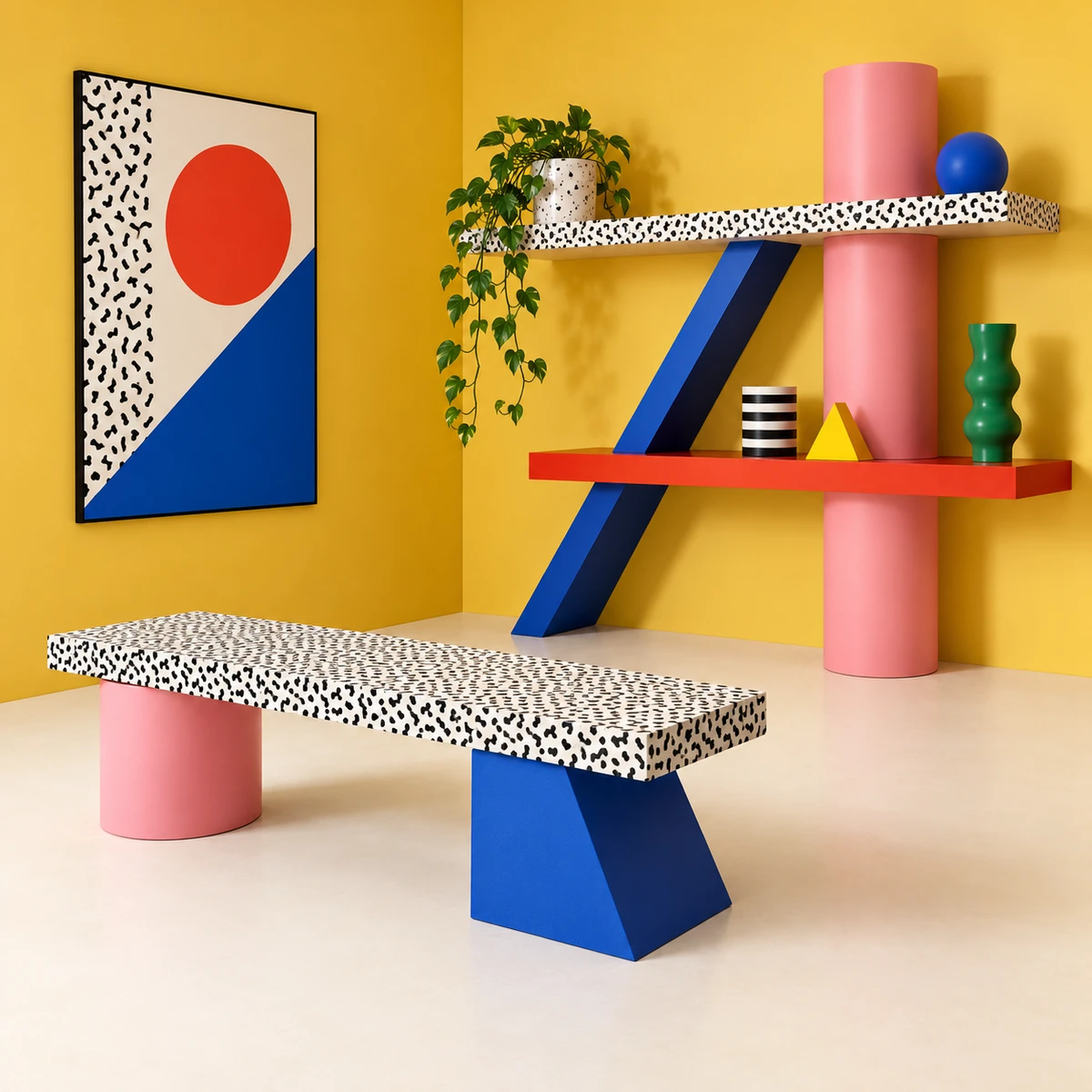
An asymmetric shelving-and-bench ensemble uses cylinders, diagonals and patterned laminate to organize a spacious interior corner.
Make
Memphis interior treatment with asymmetrical geometric forms, vivid clashing colors, patterned laminate surfaces and playful cylindrical and diagonal rhythms.
A sparse shelving-and-bench ensemble replaces the furnished salon, emphasizing the rhythm of cylinders, diagonals and separately patterned planes.
A starting point: add your own subject or details in your image tool.
An original generated interpretation using a different composition.
An original generated visual interpretation, not a documented physical artwork or a reproduction of an authenticated work.
About this aesthetic and its examples
Compare more directions
Explore other approaches for this kind of project.
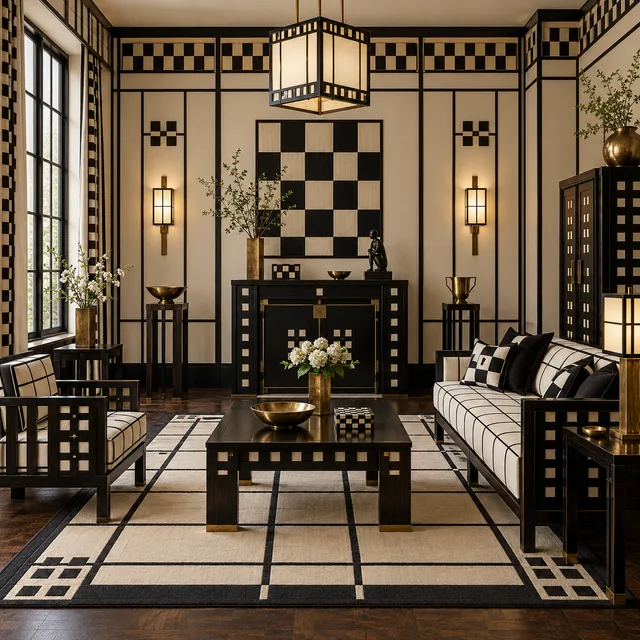
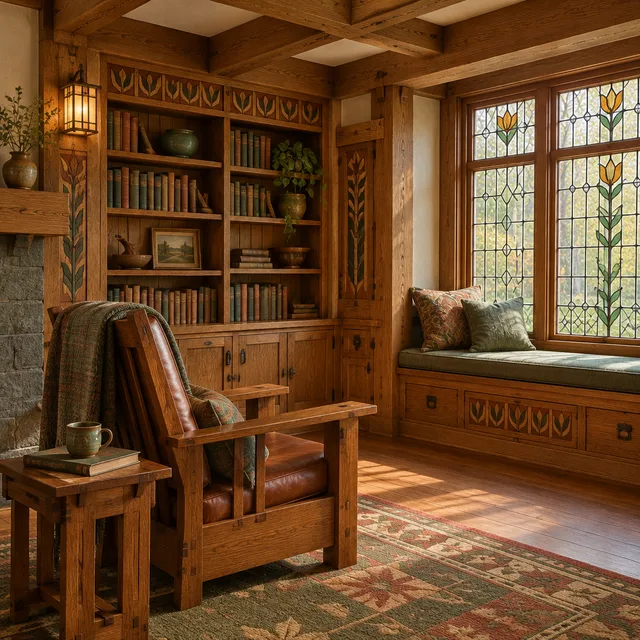
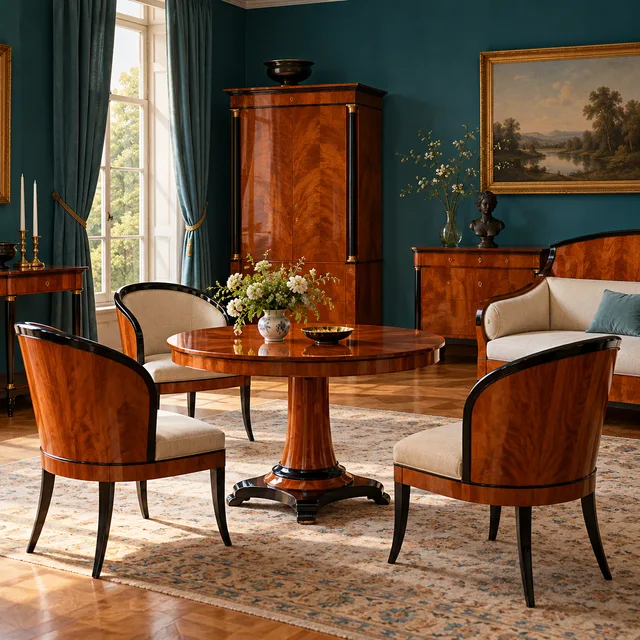
Look closer: traits and nearby styles →
About this example
This image may have used extra directions. The seed above is a reusable starting point and may produce a different result.
- Created with
- Built-in image generation (image_gen__imagegen)
- Model
- Not exposed by tool
- Generated
- 2026-10-26
How to use this promptRead as Markdown
Furniture form drives the room
Asymmetrical geometry, patterned laminate and deliberately clashing color relationships make the furniture itself expressive. Cylinders, diagonals and unusual supports establish a rhythm across the room.
This interpretation draws on the Memphis design movement. Compare the salon with the more open shelving-and-bench corner. A brighter wall color alone would not create the same language: compare the objects’ silhouettes and the relationship between pattern and structure.
Learn more: Design Museum: Memphis
Look closer at Memphis interiors
The 1980s Memphis design movement combines asymmetrical furniture, patterned plastic laminate, and deliberately clashing colours into playful geometric interiors.
In the original generated example: A Memphis salon with asymmetric geometric furniture, bright contrasting colours, patterned laminate, and cylindrical supports. Notice which details catch your eye before deciding whether the whole style is for you.
Explore across projects: Spaces to get lost in
Ask yourself: is it the palette, the surface, the shapes, or the subject you like? Save a favorite and use the visual taste guide to find a useful next direction.