A single Persian word can become a grid, a brushstroke or the title of a film. Explore 8 Farsi lettering examples with English prompts you can copy into an AI image tool. Each example includes the word’s meaning so you can follow the design even if you don’t read Persian.
Persian calligraphy in three scripts
Look at the space between the strokes. Square Kufic measures it in grid units. Thuluth leaves room between tall uprights, while Diwani tucks small loops into a rising diagonal.
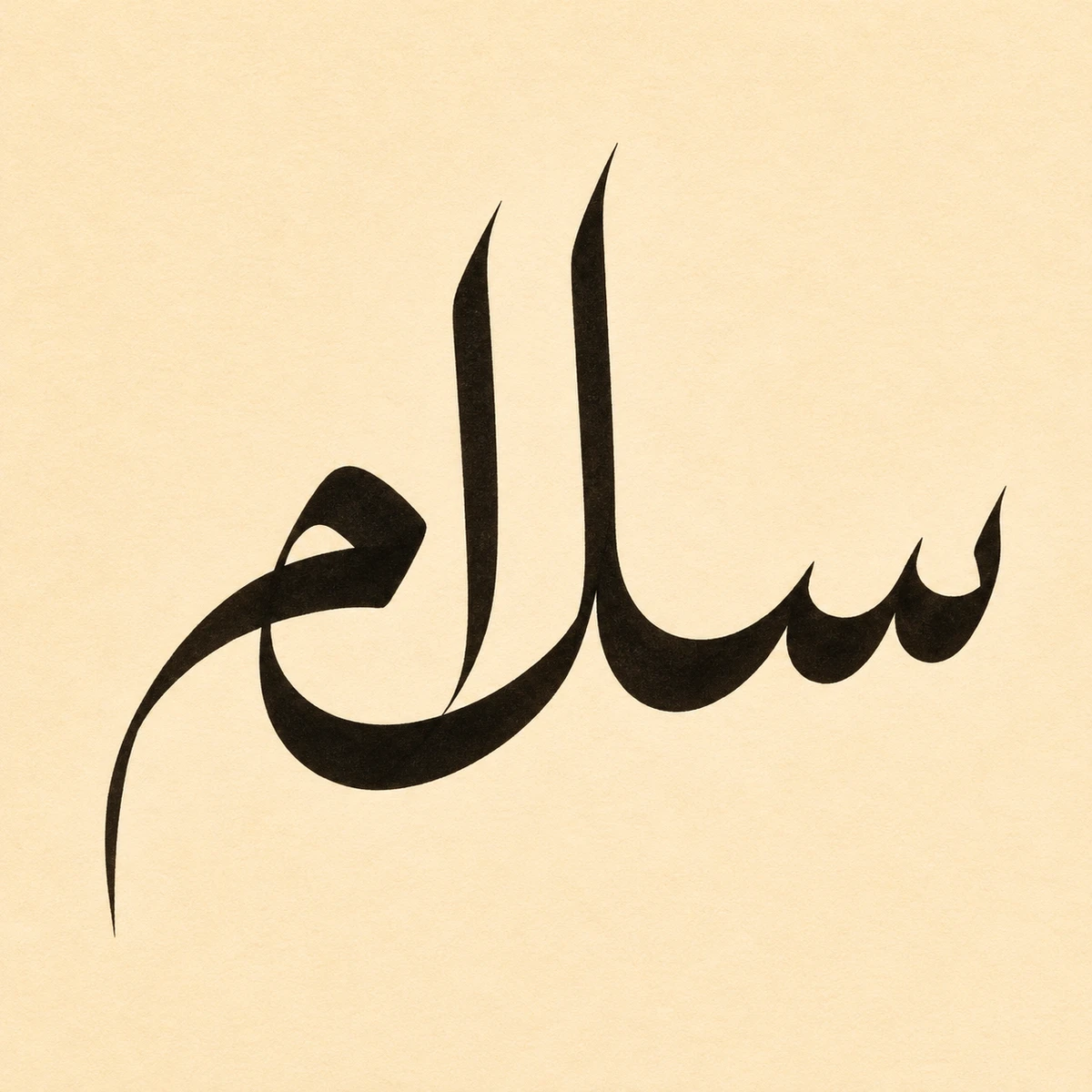
Tall pen strokes give Thuluth its height. Look at salām, the Persian greeting for “hello.” Two uprights rise from a low row of teeth, while the last letter curves back beneath the word.
Read prompt
Write the Persian greeting «سلام» in Thuluth calligraphy. Let the tall uprights rise above the sweeping bowl of the final mim. Use a broad-cut pen to give the black strokes fine tapered tips. Center the word on warm ivory paper with generous margins.
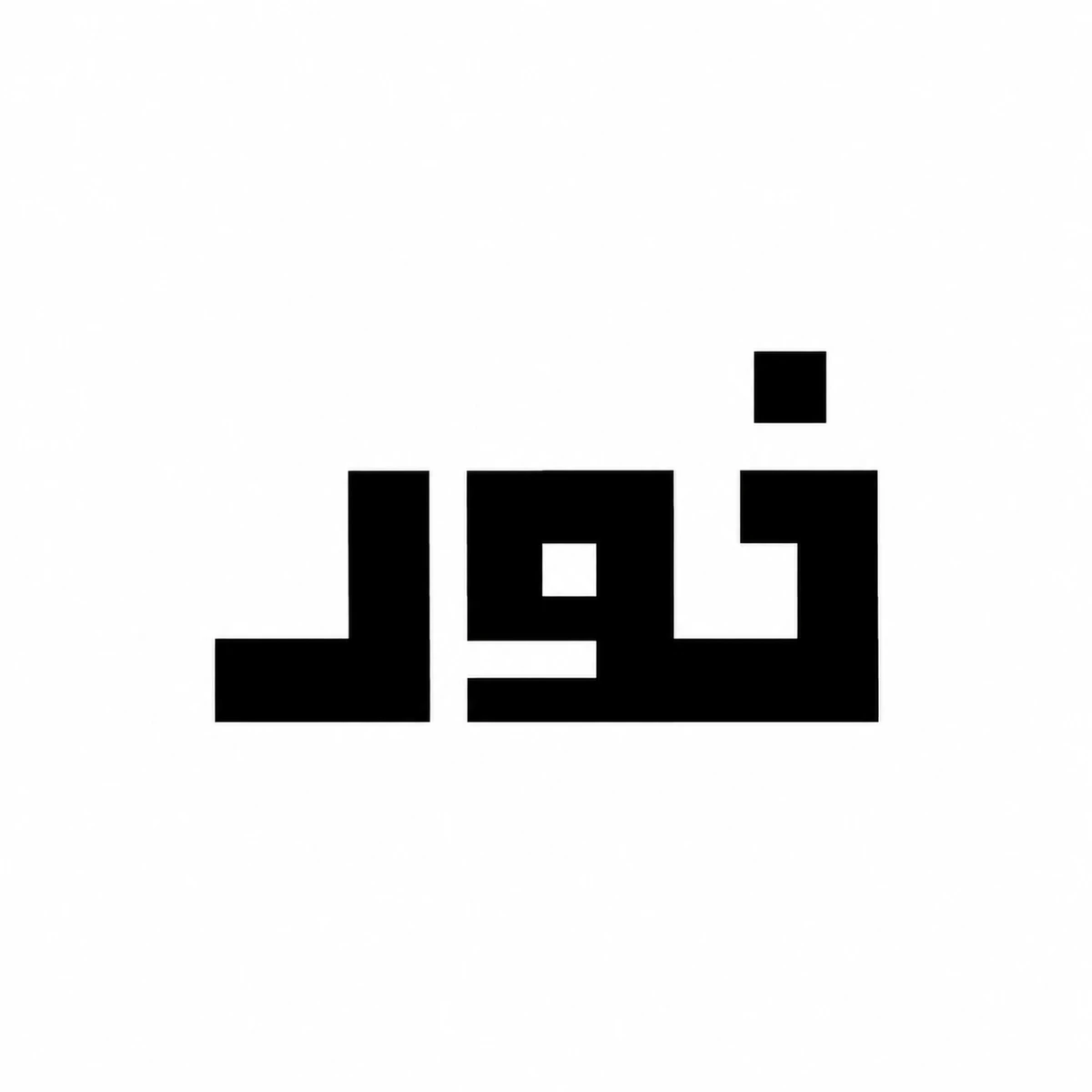
In square Kufic, the blank channels can be measured with the same unit as the ink. In nur, Persian for “light,” a single square dot sits above a run of right-angle turns.
Read prompt
Build the Persian word «نور» in square Kufic lettering. Use a single square module for both the black strokes and the white channels. Turn every corner at a right angle, place one square dot above nun, and keep the break between waw and reh clearly visible. Center the compact word on white.
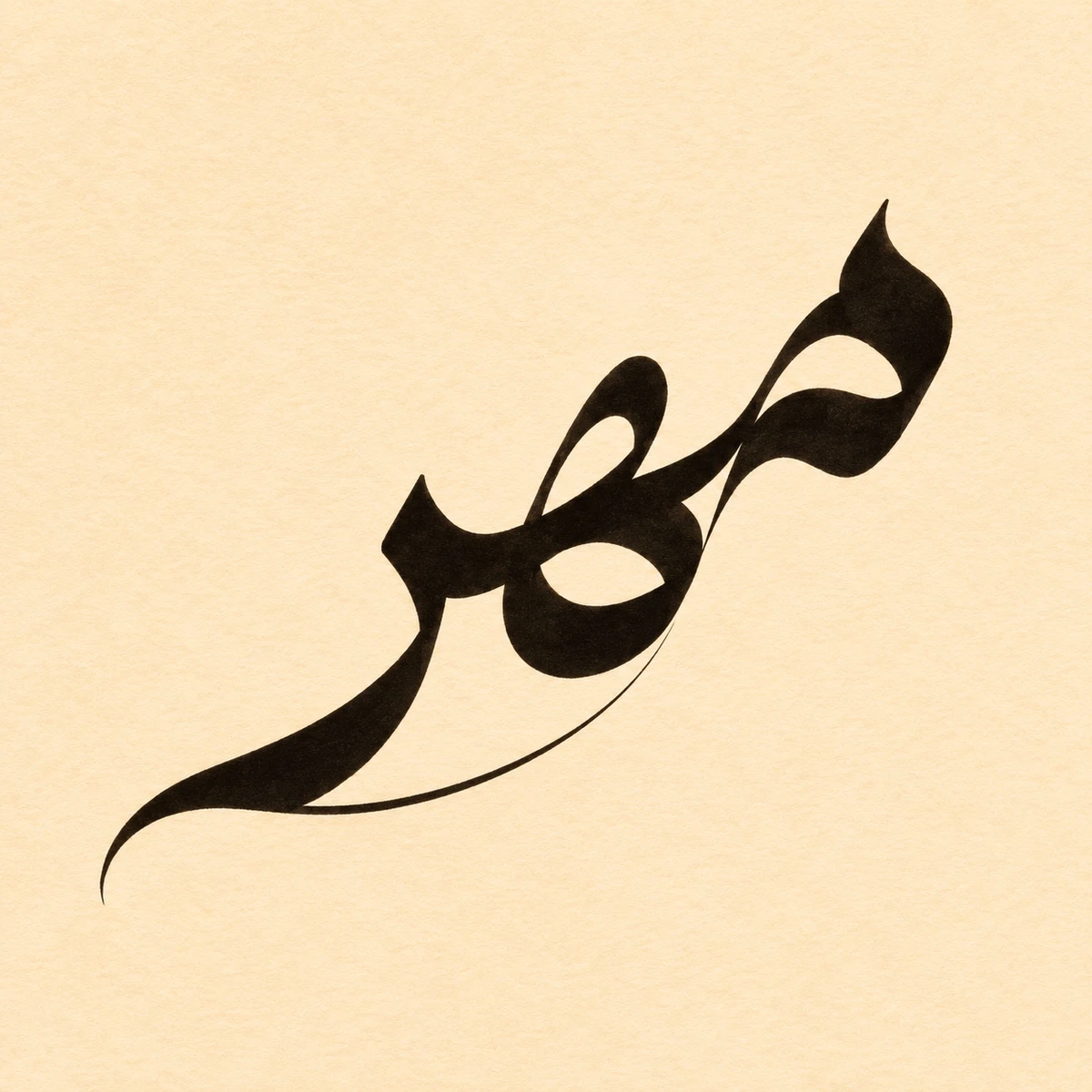
In this Diwani study, mehr, Persian for “affection,” climbs from a low sweep into a tight cluster of curves. The narrow loops and fine joins let the eye follow one letter into the next.
Read prompt
Write the Persian word «مهر» in Diwani calligraphy. Nest the curved letters along a rising diagonal, then carry the final reh under the word in a fine returning sweep. Let thick black pen strokes taper into delicate joins. Keep clear openings inside the letters against warm cream paper.
Brush lettering, poster titles and wordmarks
Choose by what the word needs to do. A heavy headline reads across a poster. A circular wordmark turns back on itself. Dry-brush edges, offset ink and graffiti outlines each give the letters a different surface.
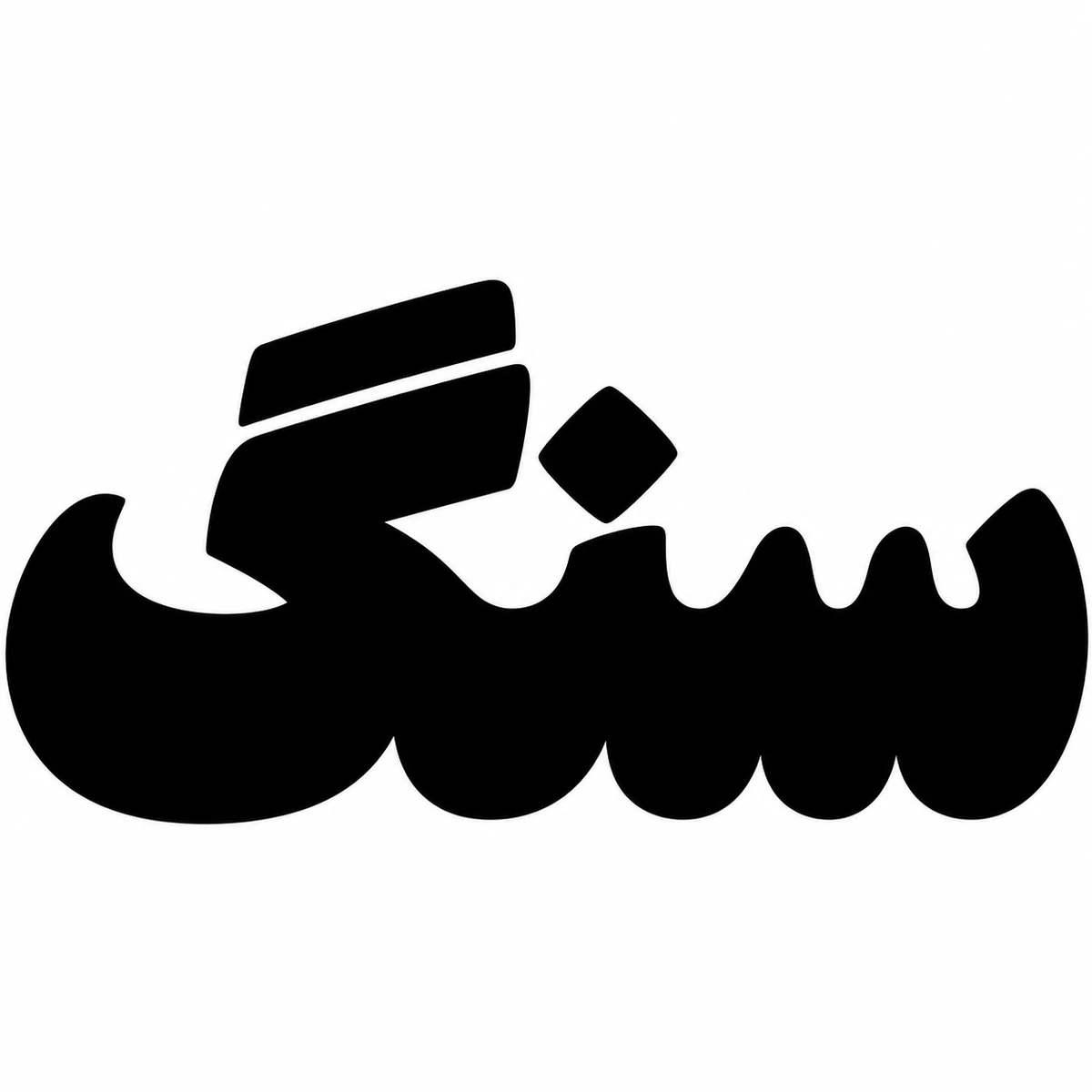
Sang means “stone” in Persian. Its weight comes from black curves packed shoulder to shoulder. Narrow cuts of white separate the teeth on the right, and a second bar identifies the final gaf.
Read prompt
Draw the Persian word «سنگ» as an extra-bold editorial headline. Swell the curves until the black letters nearly fill a horizontal band. Keep narrow white openings between the teeth of sin, the dot above nun, and the extra bar of gaf distinct. Center the lettering on white.
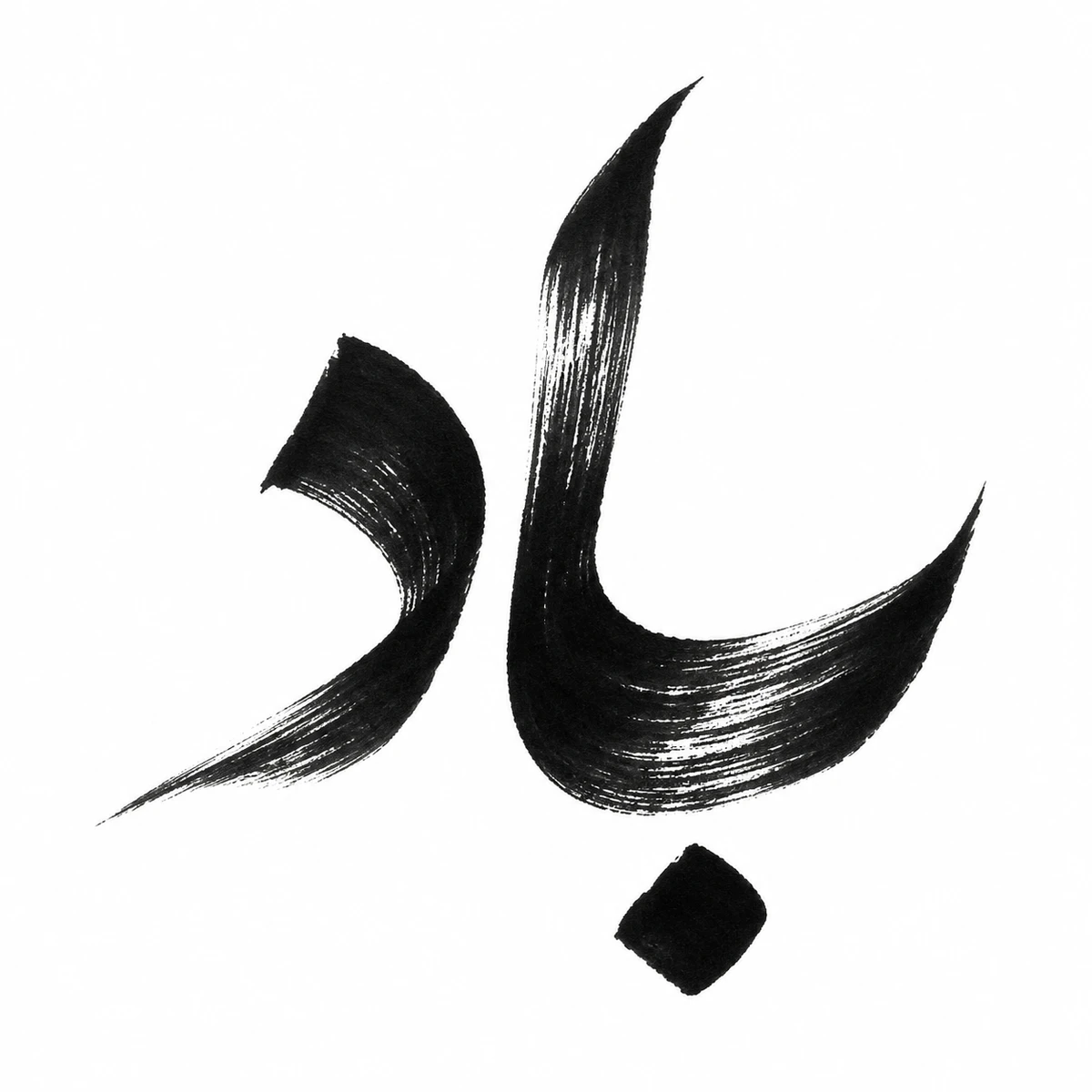
A loaded brush makes the upright in bād, Persian for “wind,” dense and black. As the bristles spread and lift, white streaks split the stroke into a ragged edge. The detached dot still reads as part of the first letter.
Read prompt
Paint the Persian word «باد» in black ink on white paper. Press a broad brush into the swelling strokes and lift it to a fine tip. Let dry bristles leave white tracks along the sweep. Keep the single dot below beh clear of any stray ink.
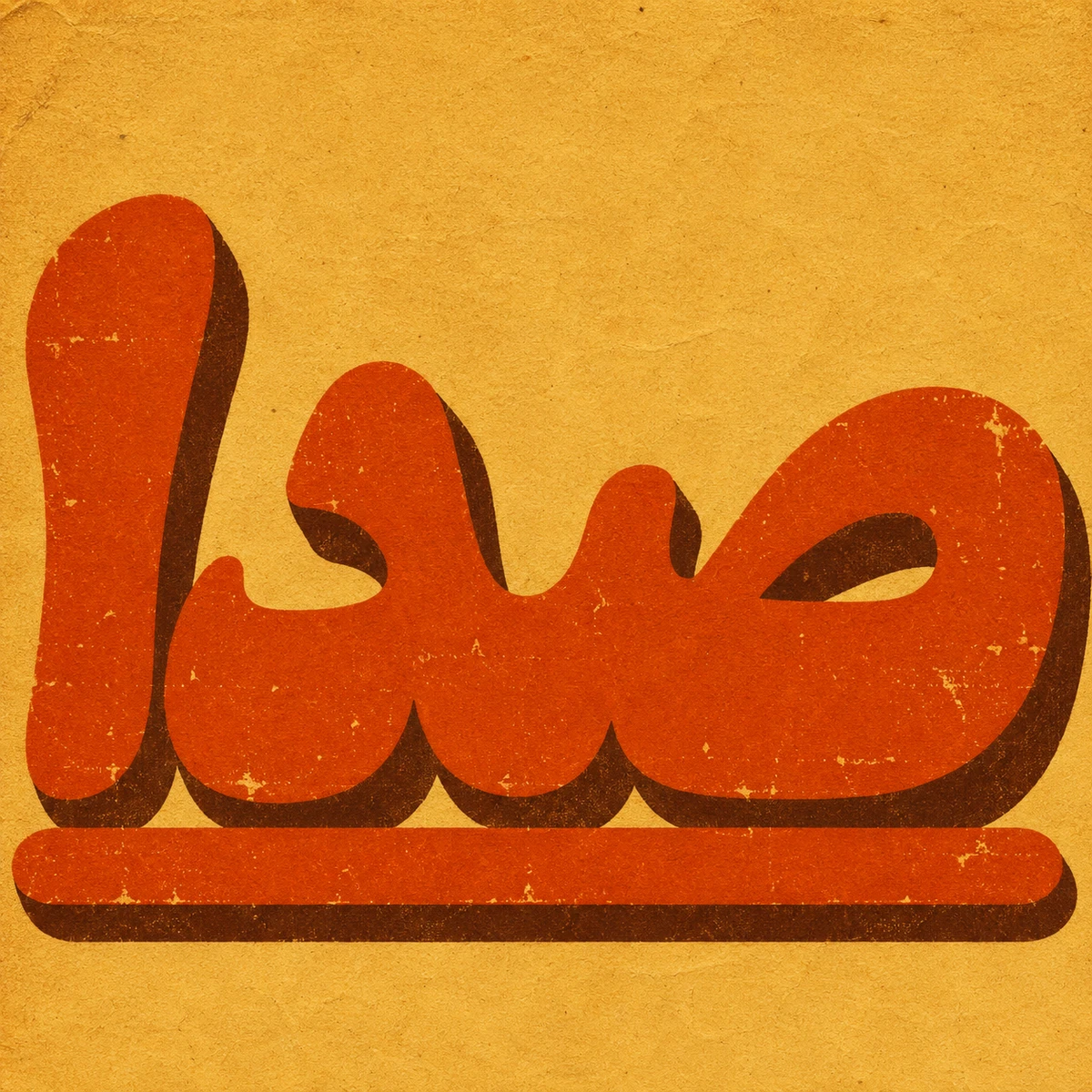
Sedā means “sound” in Persian. This imaginary film title pairs bulbous orange lettering with a brown shadow set just off the baseline. Flecks of ochre paper show through the ink like wear on a printed poster.
Read prompt
Letter the Persian word «صدا» as the title of an imaginary 1970s film. Stretch the baseline beneath plump, rounded letters. Print the title in burnt orange with a dark brown offset shadow on ochre paper. Let small breaks in the ink show through. Give the title the whole frame.
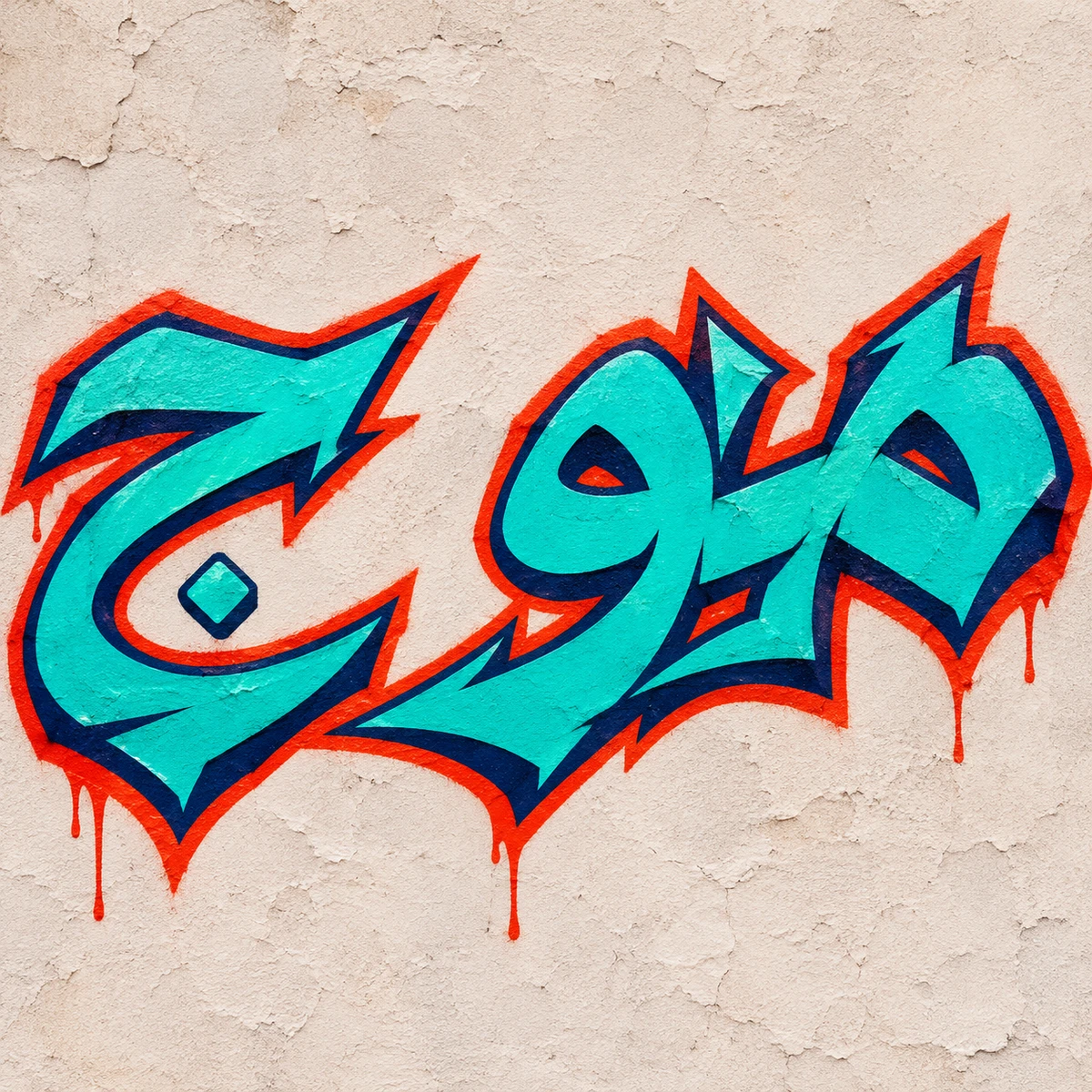
Mowj, Persian for “wave,” runs right to left across a plaster wall. Arrow tips pull the turquoise letters in opposing directions. Dark and vermilion outlines keep their edges visible where the strokes cross.
Read prompt
Paint the Persian word «موج» in wildstyle graffiti lettering on a pale plaster wall. Interlock the angular extensions of the turquoise letters, then outline the silhouette in deep navy and vermilion. Give the final jim exactly one dot, tucked inside its open bowl. Keep open wall space between waw and jim. Let a few paint drips hang from the outer contours.
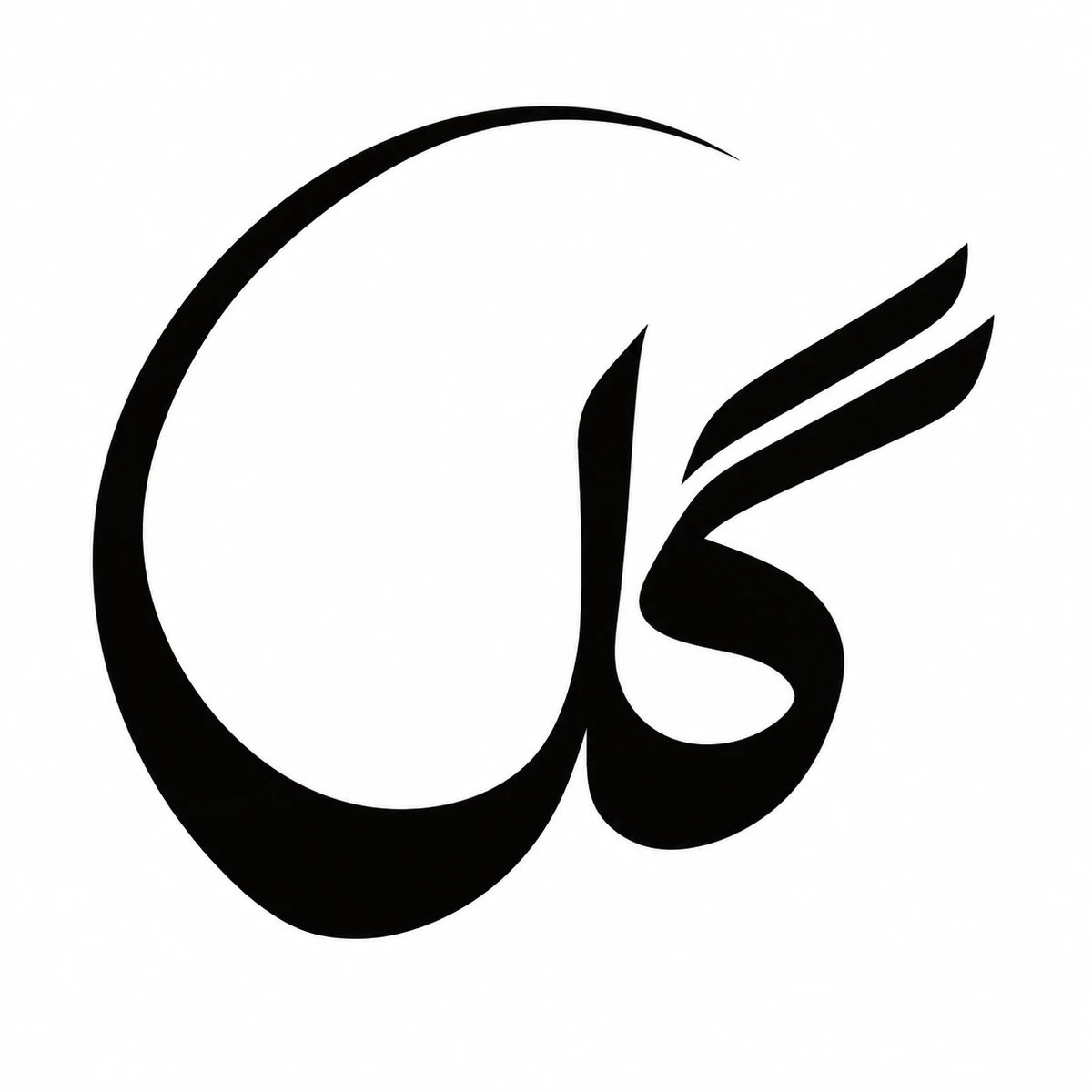
In gol, Persian for “flower,” the final letter sweeps up around the word to draw an open circle. The two sloping strokes of gaf give the eye a place to start reading inside the curve.
Read prompt
Draw a circular calligraphic wordmark for the Persian word «گل». Write gaf joined to lam, with the two parallel strokes of gaf clearly visible. Sweep the bowl of lam up and around the word so the letters themselves describe a circle. Balance the black ink with open white space at the center.
Using your own Persian word
Paste your word in Persian script and adjust any instructions about its letters. For example, the square Kufic prompt places a dot above the first letter of نور (nur, “light”). A different word may need a different number of dots. Compare the result with your spelling from right to left, checking where letters join and where a gap belongs.