
Bauhaus geometry
Interpretive diagram panel
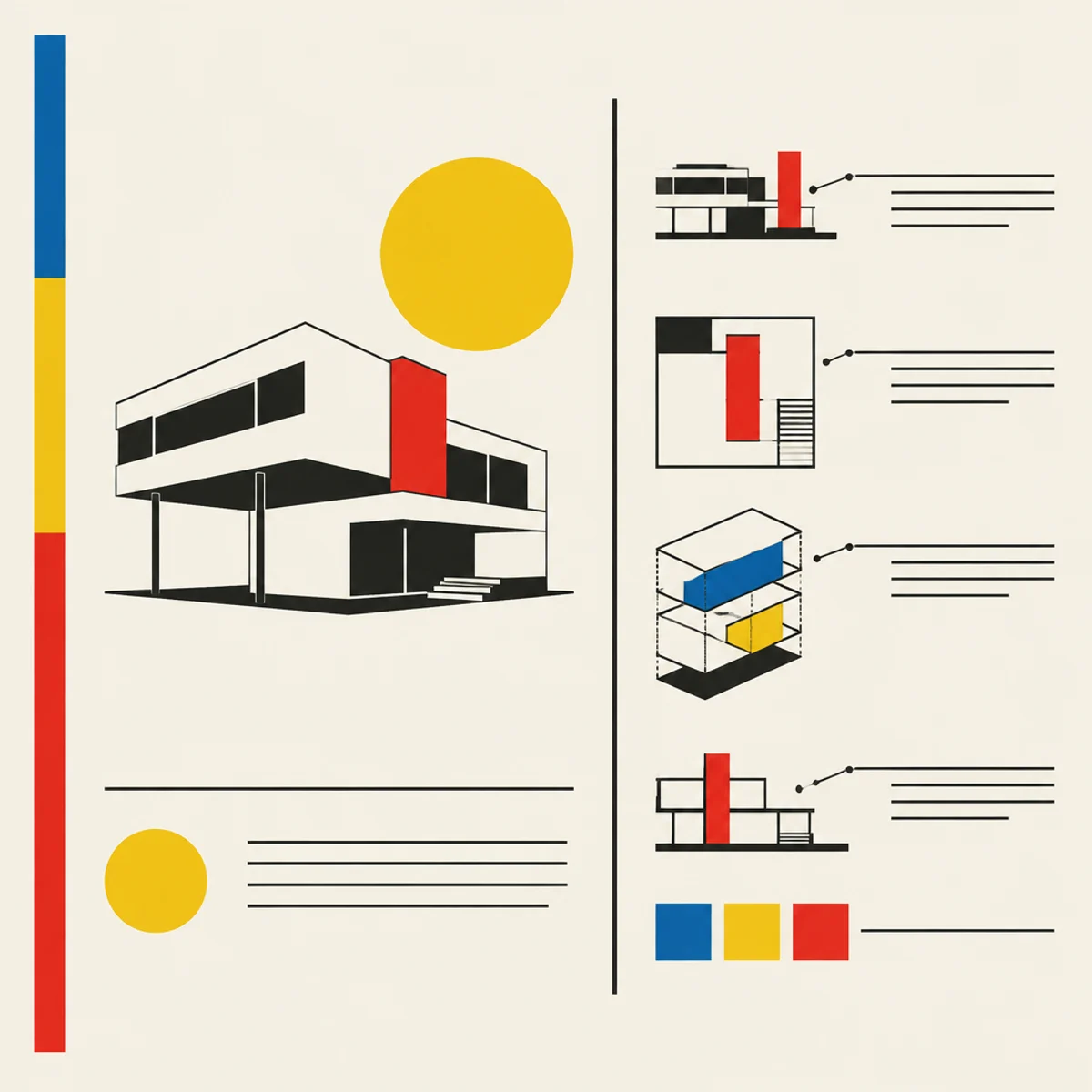
Bauhaus geometry adapted into a museum-style interpretive panel with asymmetric modular stacking, annotated rule lines, and generous reserve space.
Make
Bauhaus-inspired graphic treatment with elementary geometric forms, asymmetrical balance, primary-color blocks, black rules and generous negative space.
Keeps the recognizable Bauhaus language while shifting from pure composition to a spatially organized interpretive panel. The visible difference is a more editorial, diagrammatic layout with stacked information blocks and annotation cues instead of a free abstract field. The parent traits remain: circles, triangles, asymmetrical balance, primary colors, black rules, and off-white negative space.
A starting point: add your own subject or details in your image tool.
Another original example of the same style seed.
Automated review only; results vary by image tool.
About this aesthetic and its examples
Compare more directions
Explore other approaches for this kind of project.



Look closer: traits and nearby styles →
About this example
This image may have used extra directions. The seed above is a reusable starting point and may produce a different result.
- Created with
- OpenAI Image API
- Model
- gpt-image-2.5-flare
- Generated
- 2026-10-15
How to use this promptRead as Markdown
A hierarchy of simple shapes
Circles, triangles, rectangular color areas and black rules create an asymmetric composition with generous open paper. Their relative scale and alignment matter more than adding every primary color.
The diagram-label variation applies this graphic organization to an interpretive panel. Its rule lines and annotations are visual devices, not evidence of a functioning engineering diagram or a historical Bauhaus document.
Look closer at Bauhaus geometry
Circles, triangles, and rectangles reduce the scene to a spare study in shape, color, and balance.
In the original generated example: A red-roofed house, triangular blue mountains, circular yellow sun, and horizontal lake bands reduced to simple geometric shapes. Notice which details catch your eye before deciding whether the whole style is for you.
Explore across projects: Quiet geometry · Color without restraint
Ask yourself: is it the palette, the surface, the shapes, or the subject you like? Save a favorite and use the visual taste guide to find a useful next direction.