
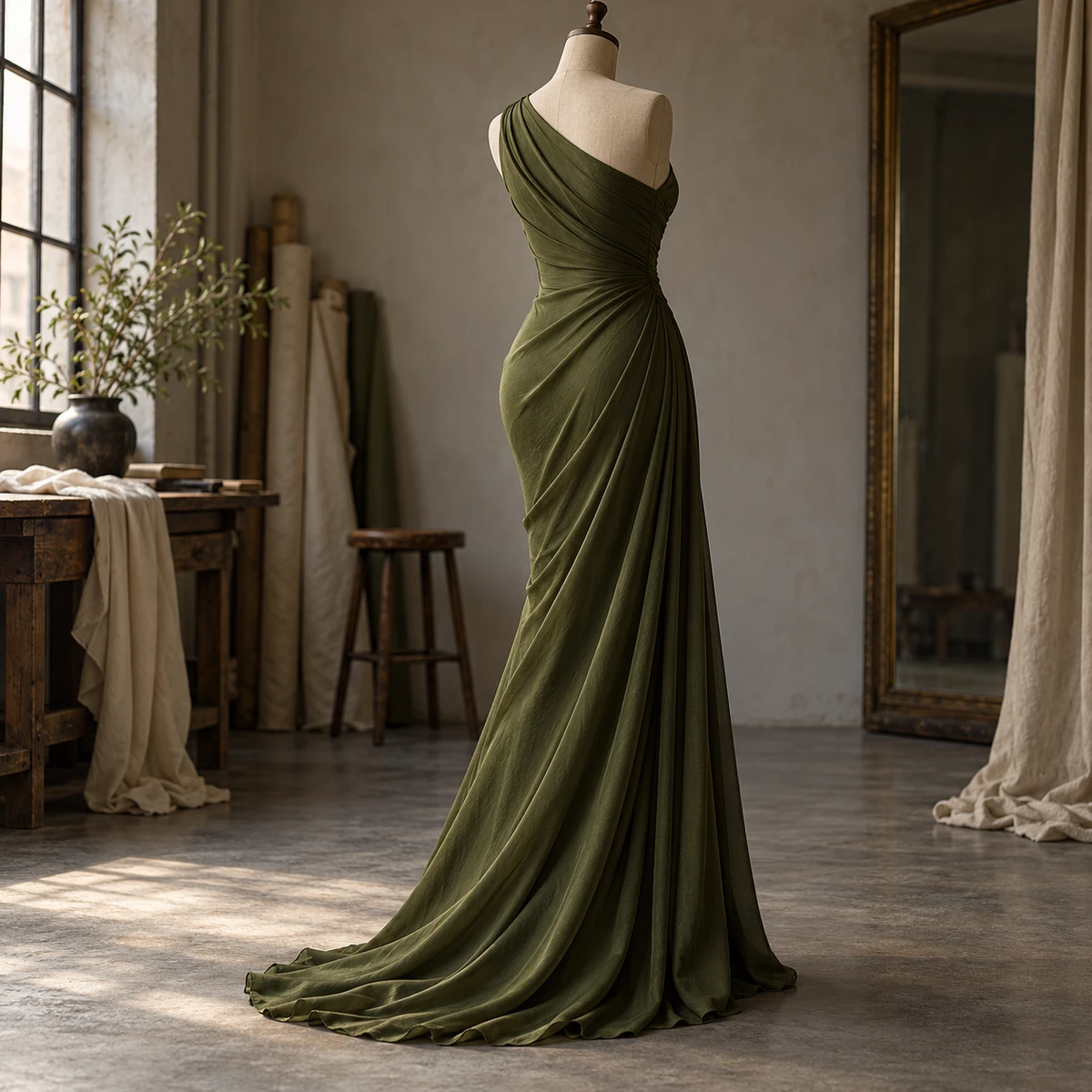
Bias-cut draping
Oblique wrap drape
A three-quarter view reveals a continuous diagonal wrap, supple oblique folds and a fluid silk-crepe fall.
Make
Bias-cut draping treatment with body-skimming fluidity, supple diagonal folds, soft cowl-like transitions and an uninterrupted falling line.
An oblique shoulder-to-skirt wrap and three-quarter viewpoint replace the frontal cowled gown, changing the fold hierarchy while preserving fluid drape.
A starting point: add your own subject or details in your image tool.
An original generated interpretation using a different composition.
A visual draping concept, not a sewing pattern. Actual fabric grain, fit and construction are not verified.
About this aesthetic and its examples
Compare more directions
Explore other approaches for this kind of project.
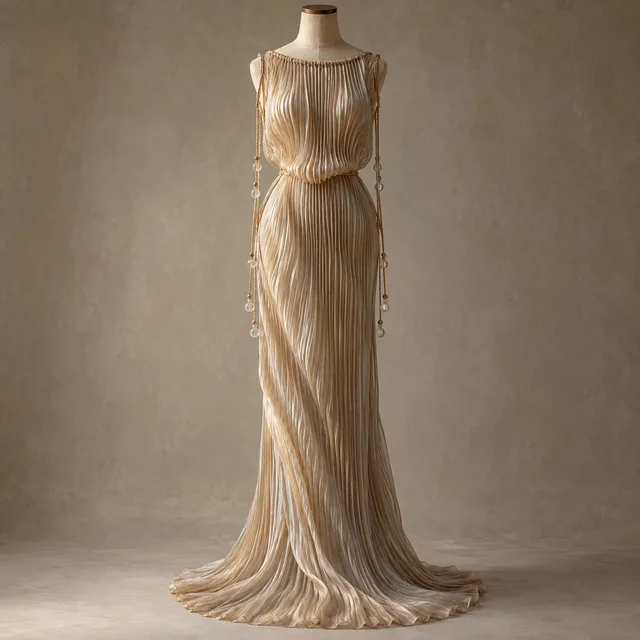
Look closer: traits and nearby styles →
About this example
This image may have used extra directions. The seed above is a reusable starting point and may produce a different result.
- Created with
- Built-in image generation (image_gen__imagegen)
- Model
- Not exposed by tool
- Generated
- 2026-10-26
How to use this promptRead as Markdown
Diagonal grain and a fluid fall
Woven fabric cut obliquely, or diagonally to the grain, falls softly around the form. This is the starting point of bias cutting. In a draping study, a fluid body-skimming fall, soft diagonal folds and a gently cowled neckline help describe the intended effect.
The dress-form image is a visual direction. It cannot confirm the actual grain, seam layout, fit or behavior of a chosen cloth. Compare the frontal cowl with the variation’s asymmetrical shoulder wrap and oblique folds. A more specific Vionnet study would need its own documented construction language rather than becoming a second name for any bias-cut gown.
Look closer at Bias-cut draping
A couture construction language cuts woven cloth diagonally to the grain so it falls fluidly, skims the body, and forms supple oblique folds with little rigid shaping.
In the original generated example: A bias-cut silk-crepe gown on a dress form, with a softly cowled neckline, diagonal draped folds, and a fluid long skirt. Notice which details catch your eye before deciding whether the whole style is for you.
Ask yourself: is it the palette, the surface, the shapes, or the subject you like? Save a favorite and use the visual taste guide to find a useful next direction.