
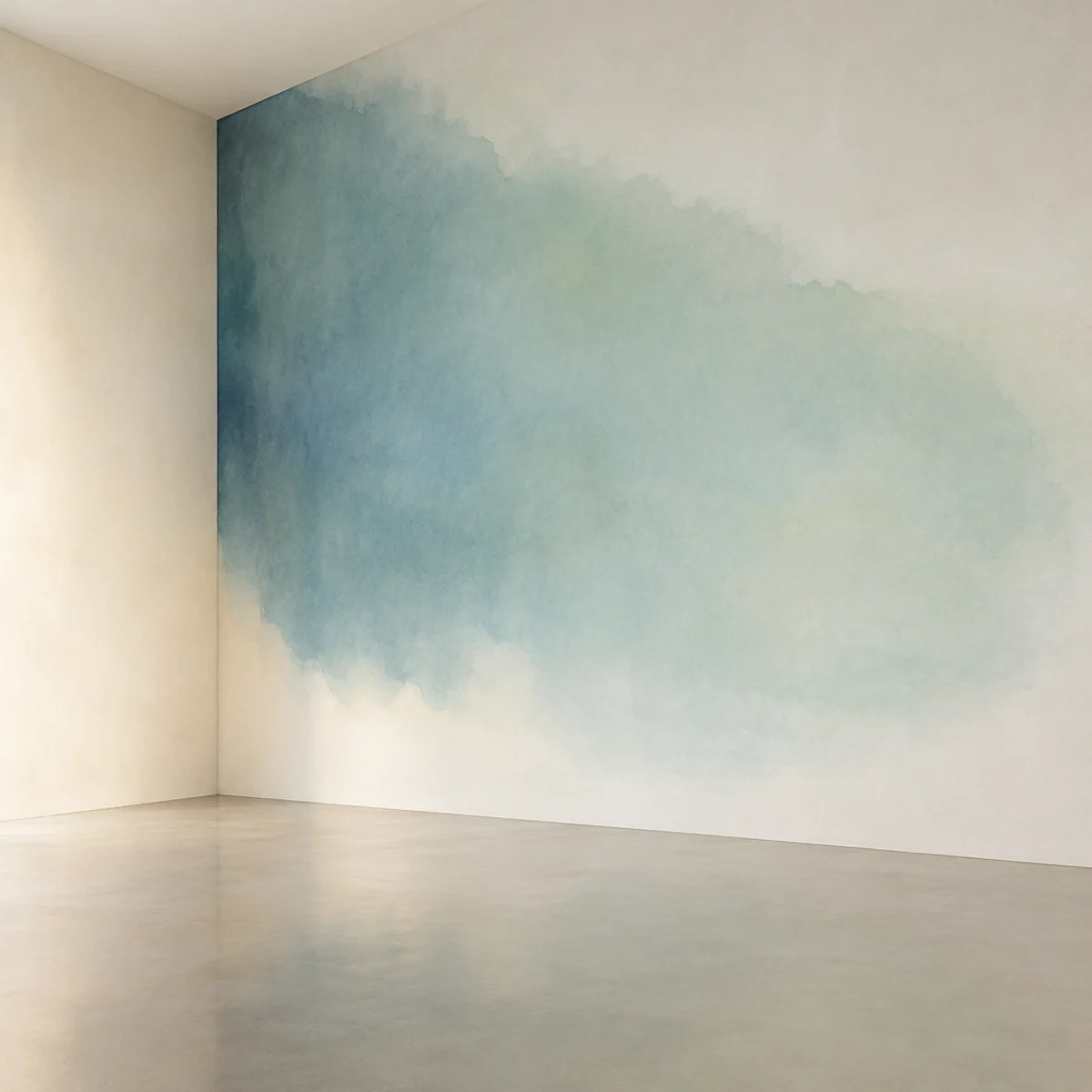
Color Field painting
Corner-anchored color veil
A corner-driven architectural Color Field variation for lobby-scale murals, using stained veils, soft edges, and a large quiet field to make the room joint act as the compositional hinge.
Make
Color Field painting with large expanses of stained color, soft edge relationships, and minimal focal structure; abstract, spacious, and quietly luminous.
Compared with the parent sample’s floating broad fields, this version is built for a lobby wall corner, so the composition becomes asymmetrical and architectural. It preserves the stained, softly edged, minimal Color Field language while making the wall joint and negative space the main spatial event.
A starting point: add your own subject or details in your image tool.
Another original example of the same style seed.
Automated review only; results vary by image tool.
About this aesthetic and its examples
Compare more directions
Explore other approaches for this kind of project.
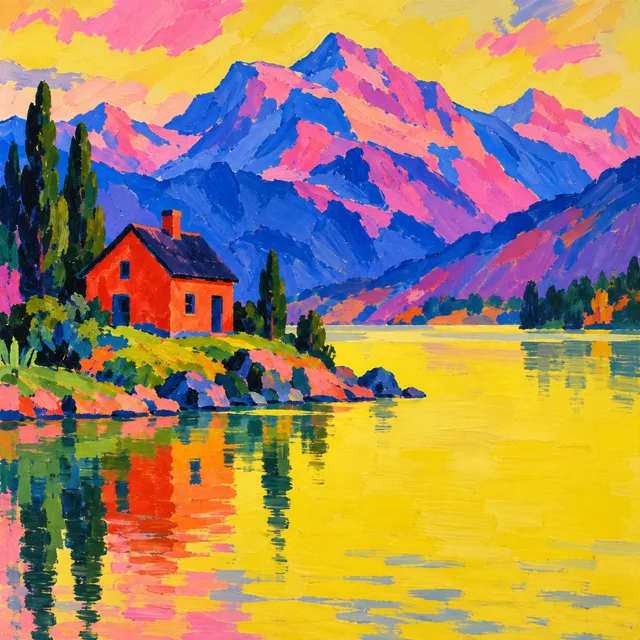
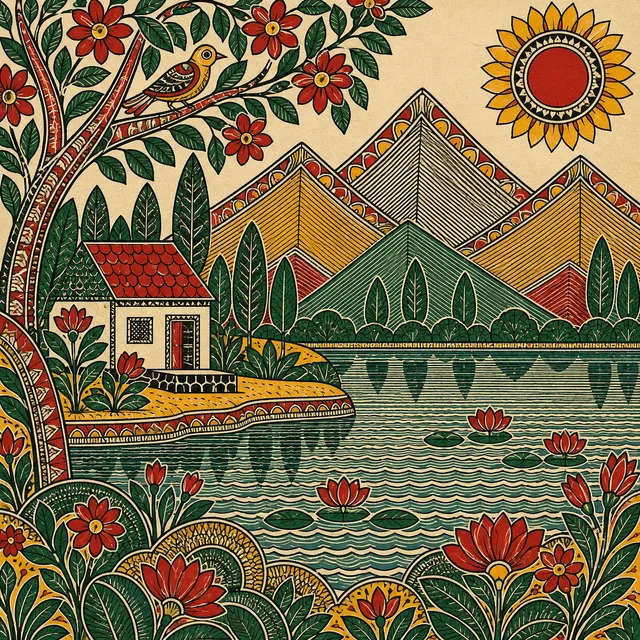
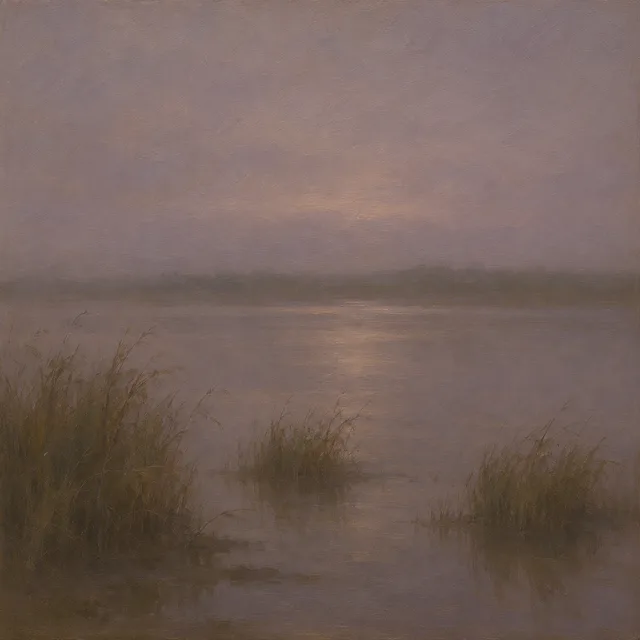
Look closer: traits and nearby styles →
About this example
This image may have used extra directions. The seed above is a reusable starting point and may produce a different result.
- Created with
- OpenAI Image API
- Model
- gpt-image-2.5-flare
- Generated
- 2026-10-17
How to use this promptRead as Markdown
What is Color Field painting?
Color Field painting is an abstract approach in which large areas of color carry the composition. Attention rests on relationships between fields rather than a clearly depicted subject or a sequence of forceful gestures.
This example uses soft transitions and stained-looking color areas. The mural variation moves that spacious treatment into an architectural corner. Soft edges describe these examples; they are not a rule for every work associated with Color Field painting.
Soak-stain is a physical technique associated with Helen Frankenthaler: diluted paint enters the canvas fibers rather than sitting only as a raised surface. The National Gallery of Australia explains its connection with Color Field painting. It is one route to color fields, not a synonym for the entire movement. A generated stained appearance cannot establish that paint was absorbed into real canvas.
For an AI study, compare translucent overlaps, open ground and softened pooling edges while keeping the overall composition fixed. Those visible relationships can guide an exploration; the image cannot teach safe material handling or verify a practical studio method.
Compare it with Action Painting: broad color relationships lead here, while directional brushwork, drips and visible paint movement lead in the gestural example.
Look at how much of the image each field occupies, where its edges soften and whether any one shape dominates. In the corner mural, the wall joint anchors the color veil while the quiet ground remains part of the composition. Op art offers a different comparison: repeated forms and contrasts can produce optical vibration rather than this spacious field relationship.
Learn more: MoMA: Color Field painting · National Gallery of Australia: Helen Frankenthaler and soak-stain
Look closer at Color Field painting
Abstract painting defined by expansive color areas, soft edge transitions, and a reduced sense of focal hierarchy.
In the original generated example: Abstract painting with broad color fields and soft transitions. Notice which details catch your eye before deciding whether the whole style is for you.
Explore across projects: Quiet geometry · Color without restraint · A little time travel
Ask yourself: is it the palette, the surface, the shapes, or the subject you like? Save a favorite and use the visual taste guide to find a useful next direction.