
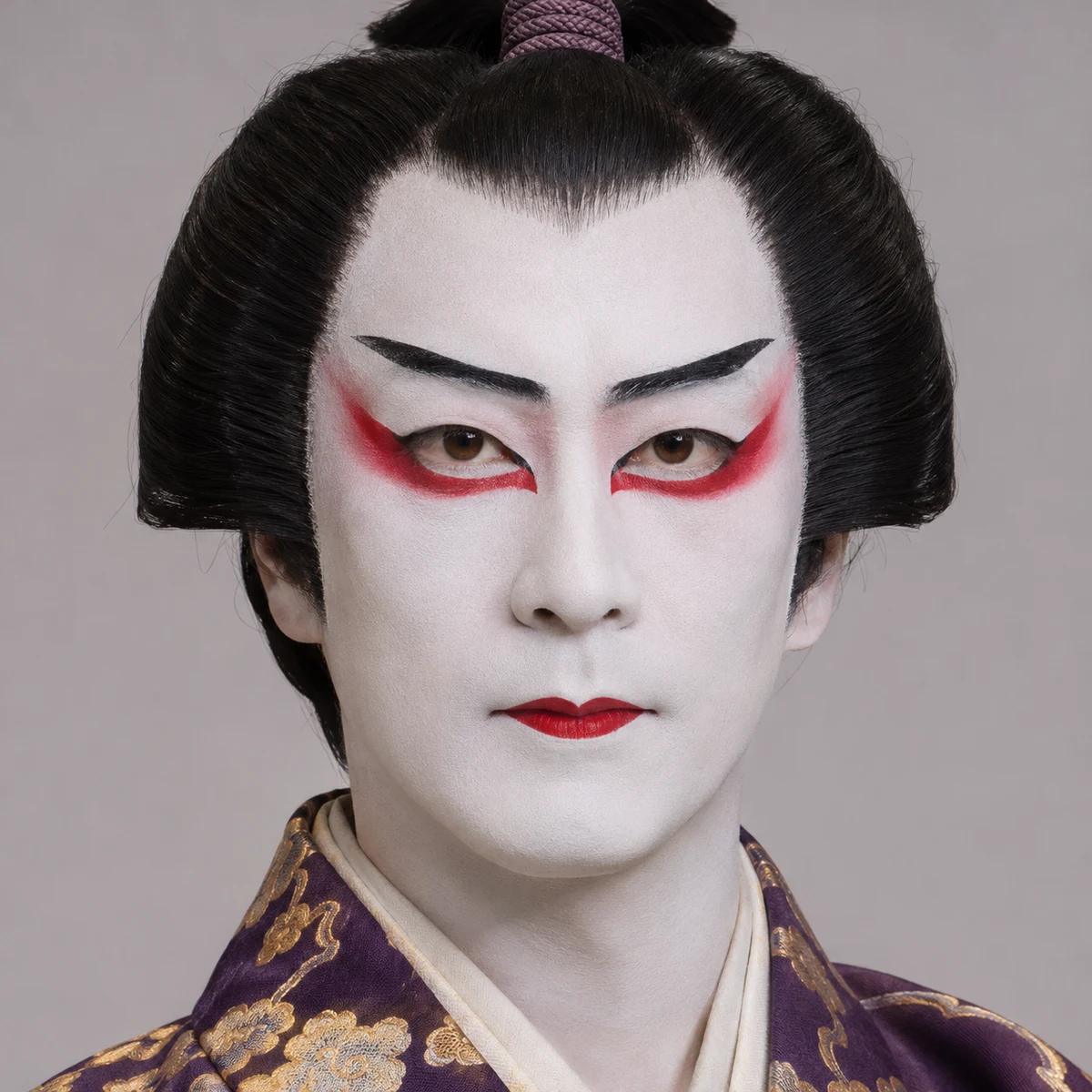
Kumadori
Restrained red makeup
Economical red eye sweeps leave most of the face open. Compare this restraint with the denser original portrait.
Make
Kumadori-inspired restrained red makeup with a white ground, economical curved eye contours, dark defined brows, softly blended edges and generous unmarked areas.
Economical red eye sweeps leave most of the face open. Compare this restraint with the denser original portrait.
A starting point: add your own subject or details in your image tool.
Keep the defining treatment and add your own subject and framing separately.
AI-generated makeup interpretation, not an authenticated traditional pattern or professional application instruction.
About this aesthetic and its examples
Compare more directions
Explore other approaches for this kind of project.
Look closer: traits and nearby styles →
About this example
This image may have used extra directions. The seed above is a reusable starting point and may produce a different result.
- Created with
- image_gen__imagegen
- Model
- Not exposed by tool
- Generated
- 2026-11-09
How to use this promptRead as Markdown
An atlas of Kumadori possibilities
Choose makeup studies for contours on a face, an oshiguma-inspired impression for transferred marks, or a contemporary mask adaptation for relief and material. These original AI interpretations invite comparison; follow the historical guide for documented makeup patterns and roles.
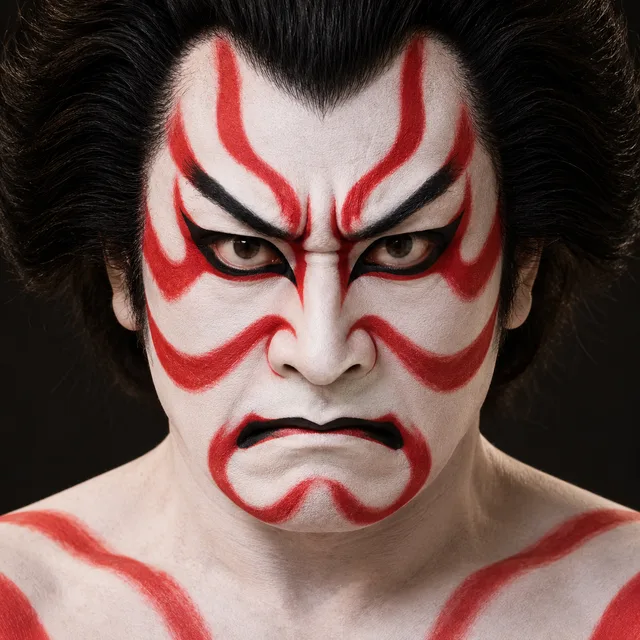
Forceful red makeup
Compare the outward rhythm of red contours and dark feature accents.
Explore this direction →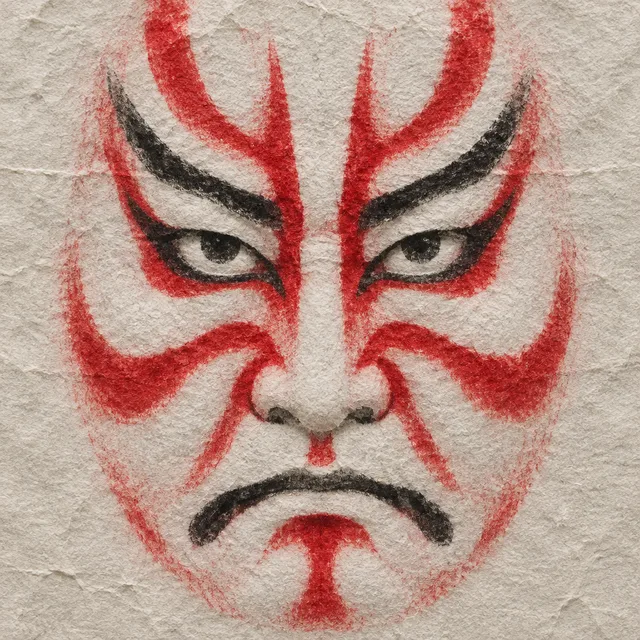
Oshiguma-inspired impression study
An AI oshiguma-inspired impression of Kumadori makeup on cloth. Compare transferred contours and softened edges with makeup on a face and a sculptural mask adaptation.
Explore this direction →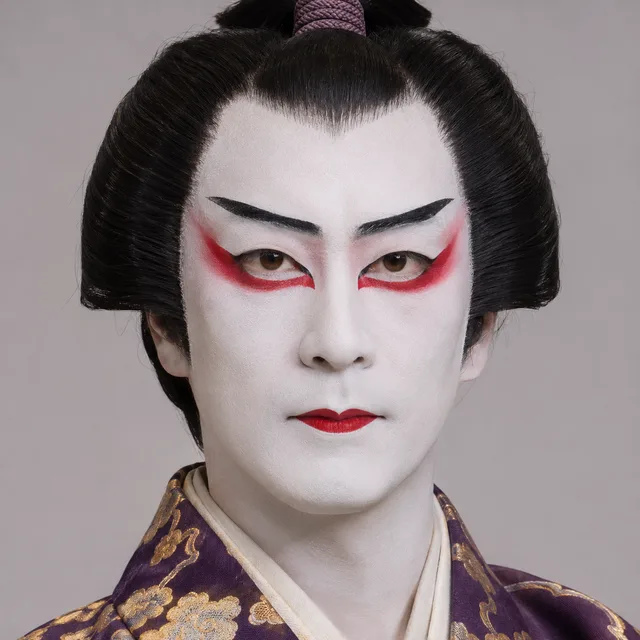
Restrained red makeup
Economical red eye sweeps leave most of the face open. Compare this restraint with the denser original portrait.
Explore this direction →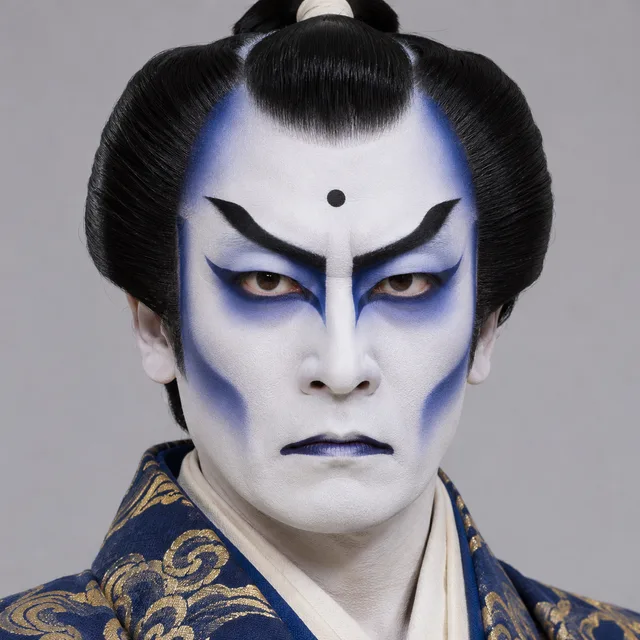
Indigo character makeup
Angular indigo eye marks and broader cheek shading change the contour arrangement as well as the palette.
Explore this direction →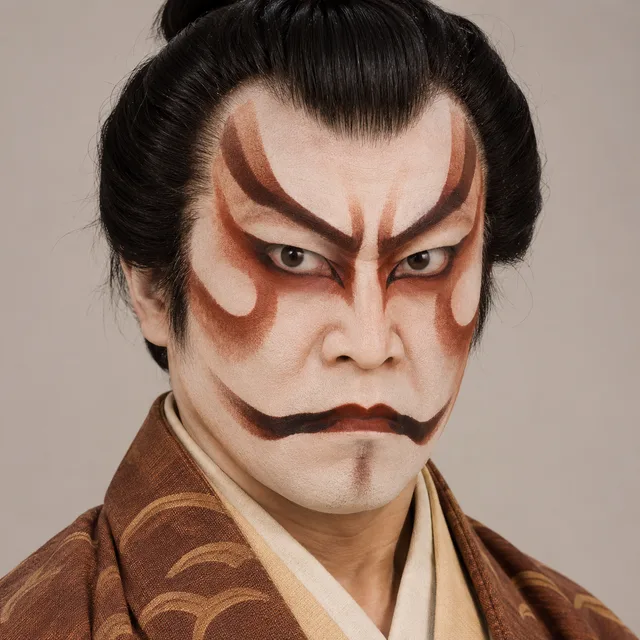
Supernatural brown makeup
Broad earthy contours and dark mouth accents create an uncanny expression through painted features.
Explore this direction →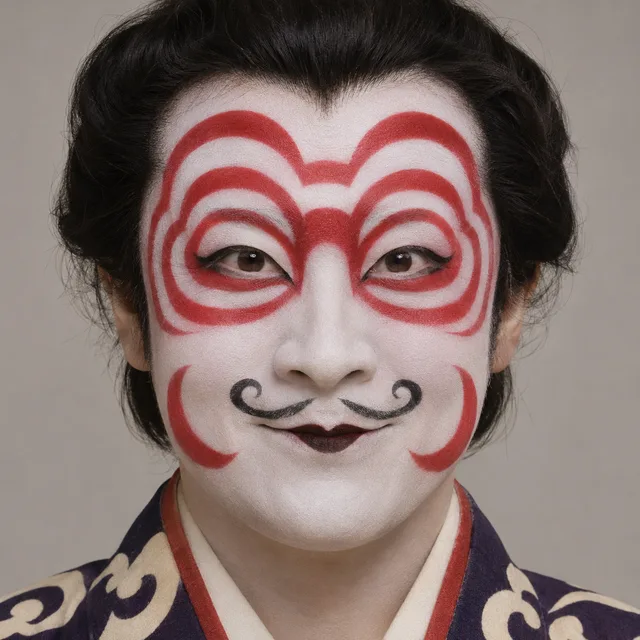
Playful character makeup
Rounded red bands around the eyes and curved mouth accents introduce a playful rhythm.
Explore this direction →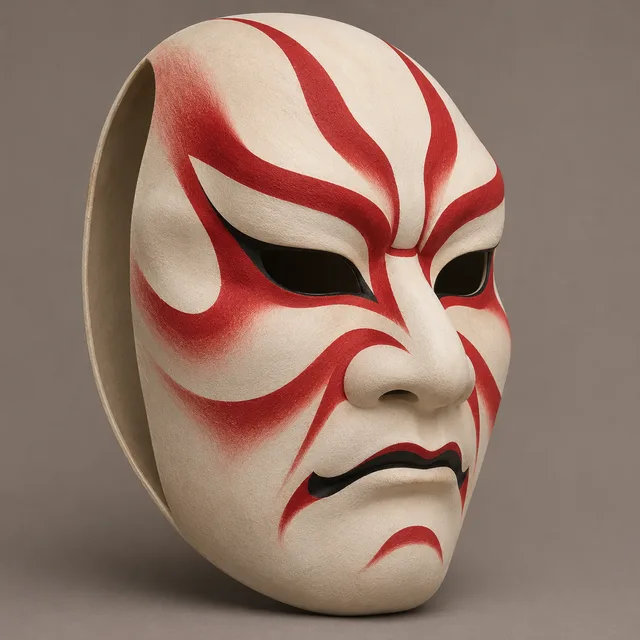
Contemporary sculptural mask
A contemporary mask object carries red contours across sculpted relief; its rim and empty openings distinguish it from makeup.
Explore this direction →Read the pattern, then the color
Restrained and forceful red designs use different arrangements of marks. Indigo, mixed-color, red-ground, supernatural and playful designs add further possibilities. The Japan Arts Council’s illustrated guide covers mukimiguma, ipponguma, nihonguma, sujiguma, Kagekiyo, kugeare, akattsura, chaguma, saruguma and namazuguma. These are contextual theatrical designs, not interchangeable color presets.
Explore the Japan Arts Council’s illustrated pattern guide ↗
Makeup, impression or mask?
Makeup follows a performer’s face. An oshiguma records a transfer of makeup; our impression study is an AI interpretation of that result. The sculptural mask is a contemporary adaptation into an object, not a documented Kabuki performance mask. Each offers a different question: how do marks follow anatomy, become an impression or wrap around relief?
When adapting a seed, change one relationship first: simplify the contours, soften one edge, leave more open ground or change the material. Keep the defining visual choices in the seed and add your subject, framing and lighting separately.
Contours, character and material
Kumadori is a Kabuki makeup language in which colored lines emphasize facial contours. The atlas explores restrained red, indigo, earthy contours and playful rounded forms alongside an impression and a contemporary sculptural mask. Each is an illustrative interpretation rather than instruction for a documented role-specific design.
An oshiguma preserves an impression of a performer’s makeup on a support such as cloth. The variation is a generated, oshiguma-inspired image. It was not made by pressing a real performer’s face onto cloth or paper, and it is not an authentic historical theatre artifact.
Compare the live-performer interpretation with the flatter, textured impression study to see how the same contour language changes when its presentation changes.
Learn more: Birmingham Museum of Art: an oshiguma facial impression
Look closer at Kumadori
Explore Kumadori through AI makeup studies, an oshiguma-inspired impression and a sculptural mask adaptation. Compare contours, expression and material.
In the original generated example: A fictional adult stage performer with red kumadori contour lines over white foundation, dark eye definition, and softened painted edges. Notice which details catch your eye before deciding whether the whole style is for you.
Ask yourself: is it the palette, the surface, the shapes, or the subject you like? Save a favorite and use the visual taste guide to find a useful next direction.