
Mannerism
Turned portrait
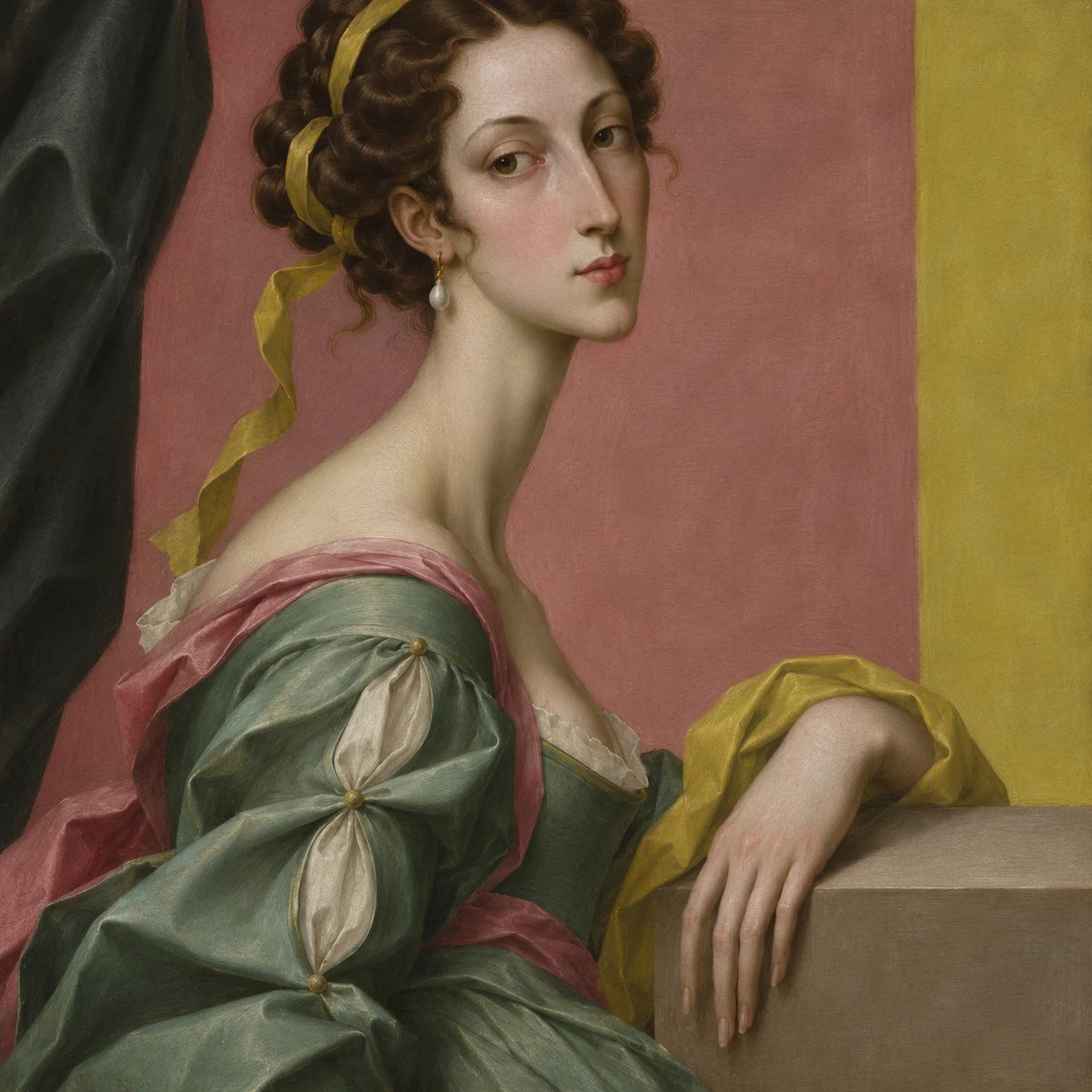
An elongated neck, turning pose and long fingers create poised tension against shallow rose and yellow color planes.
Make
Mannerist painting with elongated proportions, opposing directional curves, compressed spatial depth, refined smooth modeling and heightened contrasting color; poised tension and artificial elegance.
A single close figure and shallow color planes replace the courtyard group and receding architecture, isolating the tension between elongated proportions and a turning pose.
A starting point: add your own subject or details in your image tool.
Compare the close portrait with the courtyard gathering. Add your own subject and framing separately from the reusable aesthetic seed.
AI interpretation of Mannerist visual choices, not a historical portrait or a reference for natural anatomical proportions.
About this aesthetic and its examples
Compare more directions
Explore other approaches for this kind of project.
Look closer: traits and nearby styles →
About this example
This image may have used extra directions. The seed above is a reusable starting point and may produce a different result.
- Created with
- Built-in image generation (image_gen__imagegen)
- Model
- Not exposed by tool
- Generated
- 2026-11-15
How to use this promptRead as Markdown
Two ways to create poised tension
Mannerist elongation works with pose, space and color. Compare the crowded architectural setting with a close portrait before choosing which relationship to emphasize.
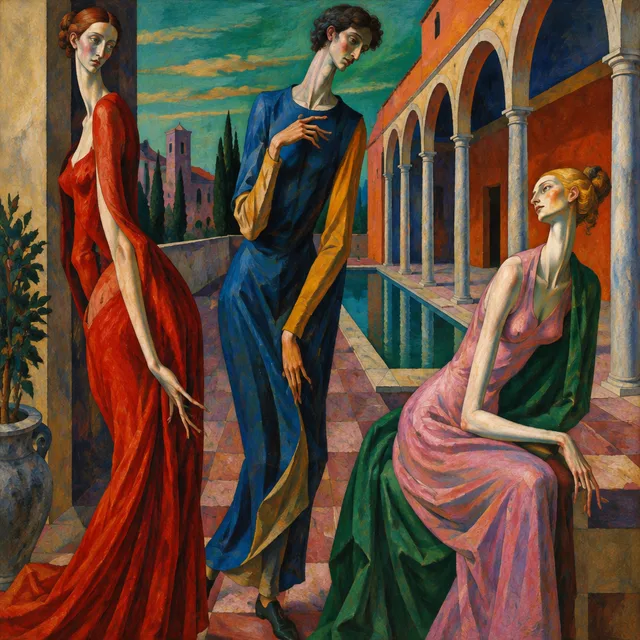
A group in restless space
Compare leaning figures with the receding arcade. Several poses compete within a compressed setting.
Explore example →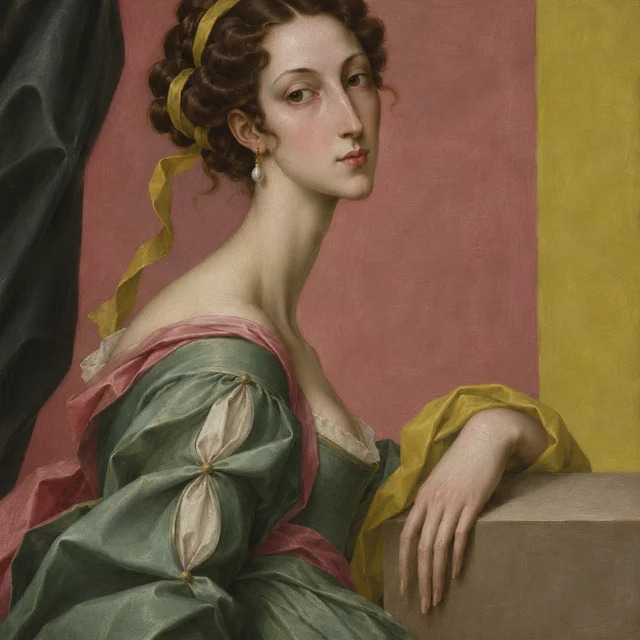
A close turning figure
Follow the long neck and fingers, the change in direction between torso and head, and the shallow color planes.
Explore example →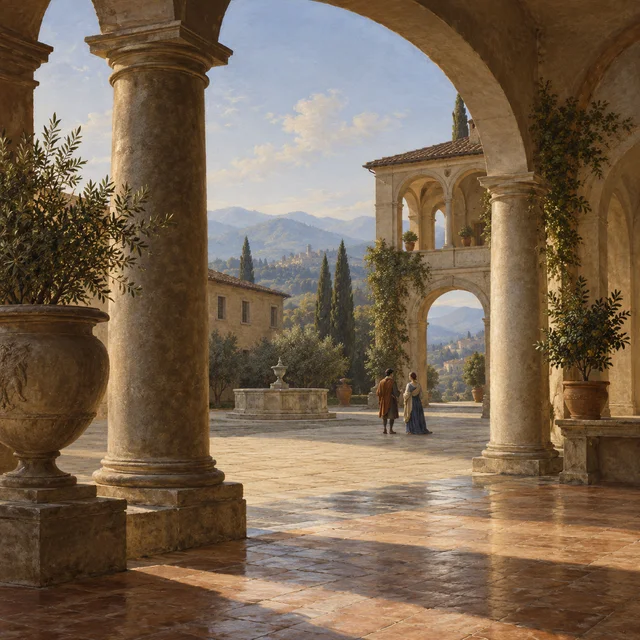
Compare balanced spatial depth
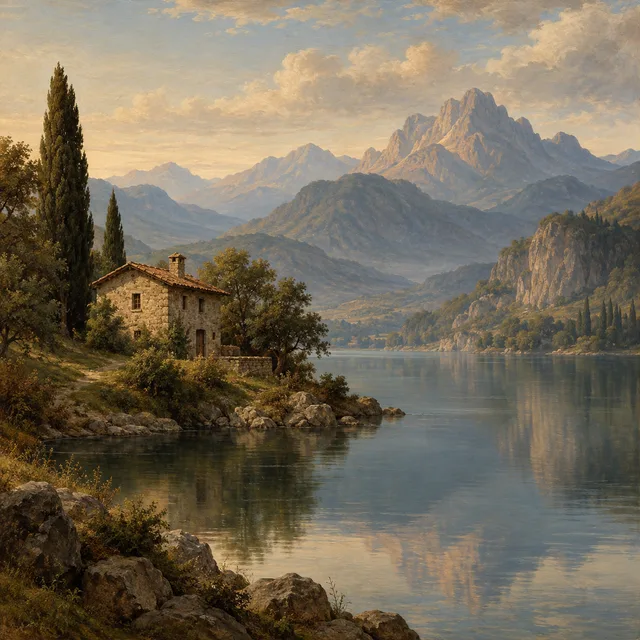
The loggia offers a quieter arrangement of modeled forms and receding hills. Compare the organizing choices, not just the historical labels.
Explore example →Try one change
Keep your subject and framing fixed. Change the balance between elongation, twisting pose and shallow space one choice at a time; inspect the result for accidental extra limbs or broken anatomy.
Elongated figures and a restless sense of space
Mannerist painting often stretches figure proportions, turns bodies into elaborate poses and compresses the space around them. These choices create tension and an intentionally artificial elegance. The Met describes this departure from the balance and clarity associated with earlier Renaissance painting.
In this invented courtyard gathering, follow the long necks and fingers, the leaning central figure and the steeply receding arcade. Warm red and orange passages sit against blue and green areas, making the figures feel heightened rather than casually observed.
The turned portrait isolates elongation in a single close figure. Follow the neck and long fingers, then compare the opposing directions of torso and head. Flat rose and yellow planes compress the background. The courtyard gathering creates tension through several figures and architecture instead.
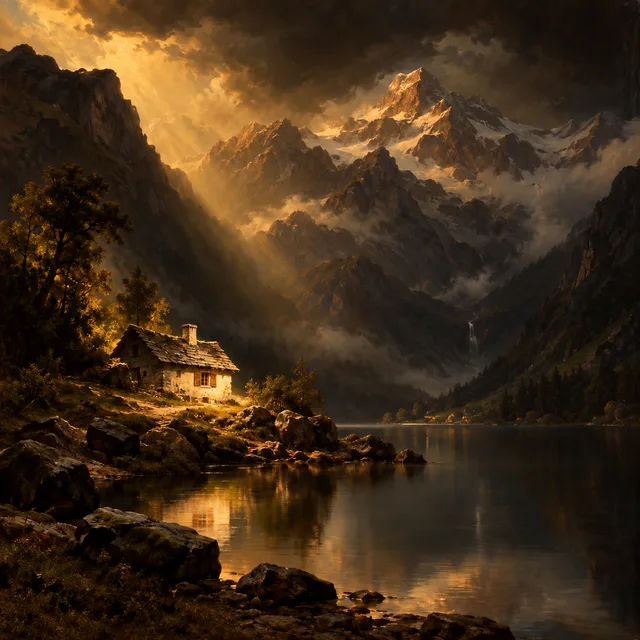
Compare the Renaissance example for its treatment of proportion and spatial order. Then compare Baroque chiaroscuro, where the light-shadow contrast is a more immediate organizing force. The traditions overlap; an elongated figure or dramatic light alone does not identify every work.
This is an original generated interpretation, not a historical painting or a reproduction of a named artist’s work. It is a reference for exploring proportion, pose, color and composition, rather than a model of natural anatomy.
Learn more: The Met: Mannerism, Bronzino and his contemporaries
Look closer at Mannerism
Explore elongated proportions, turning poses and heightened color through AI Mannerist painting examples. Compare a courtyard gathering with a close portrait.
In the original generated example: An invented courtyard gathering in a Mannerist painting style with elongated figures and unstable space. Notice which details catch your eye before deciding whether the whole style is for you.
Ask yourself: is it the palette, the surface, the shapes, or the subject you like? Save a favorite and use the visual taste guide to find a useful next direction.