
Metabolist architecture
Transit-edge pod infill
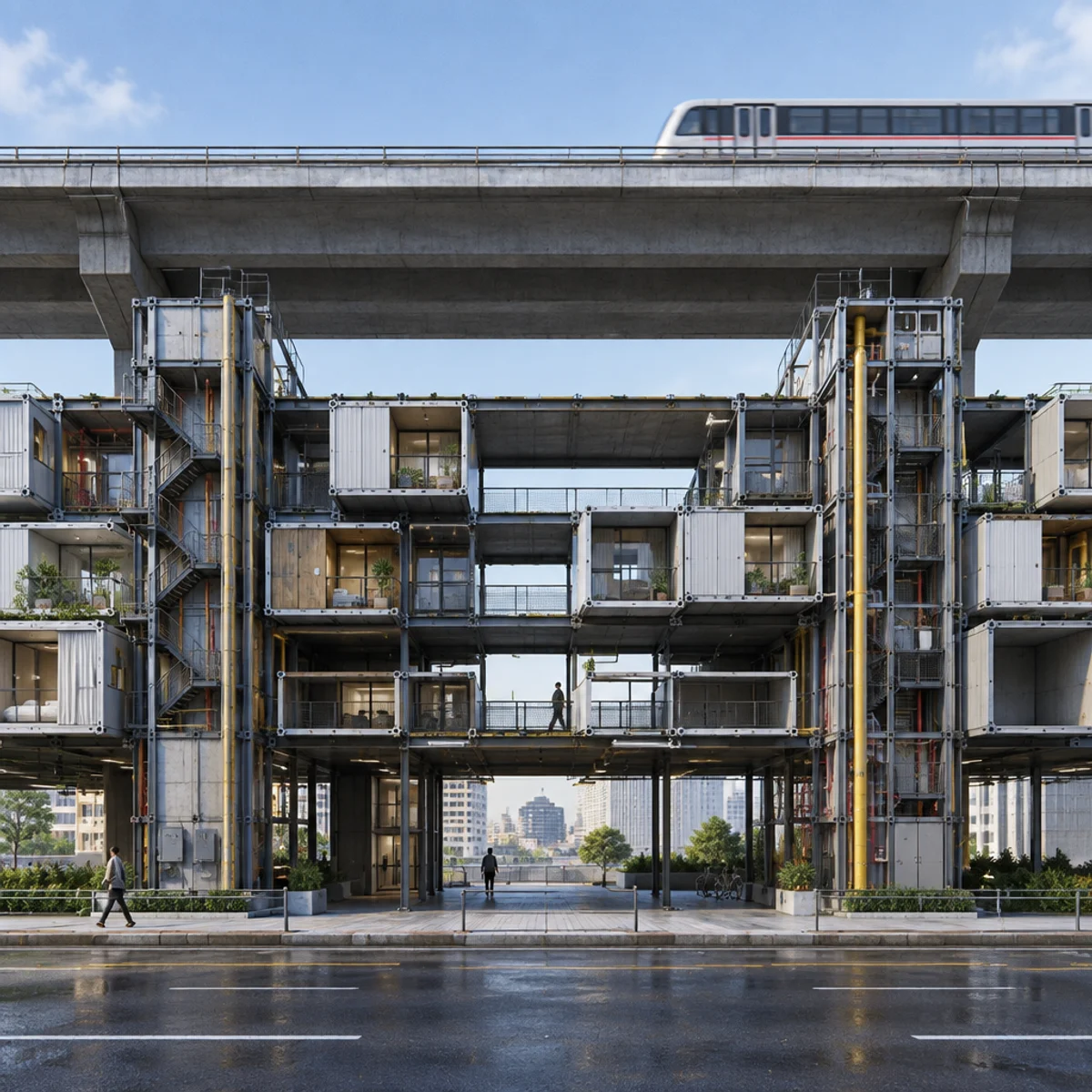
Low-rise Metabolist megastructure study organized as service cores plus replaceable pods beneath an infrastructure spine, with open bays functioning as circulation and growth gaps.
Make
Metabolist architectural treatment with distinct service cores, repeated prefabricated cellular modules, open connection zones and legible module-to-frame relationships suggesting staged growth.
Differs from the parent by shifting from a free-standing megastructure to transit-edge infill, using bridging voids and an overhead spine to make the module/frame relationship more sectional and infrastructural while keeping the core/pod logic intact.
A starting point: add your own subject or details in your image tool.
Another original example of the same style seed.
Automated review only; results vary by image tool.
Compare more directions
Explore other approaches for this kind of project.



Look closer: traits and nearby styles →
About this example
This image may have used extra directions. The seed above is a reusable starting point and may produce a different result.
- Created with
- OpenAI Image API
- Model
- gpt-image-2.5-flare
- Generated
- 2026-10-17
How to use this promptRead as Markdown
Look closer at Metabolist architecture
Japan's Metabolist movement imagines architecture as an evolving system: large support structures carry repeated cellular modules whose aggregation suggests future growth and change.
In the original generated example: A Metabolist architectural concept with repeated cellular pods attached to visible service cores and open modular connection zones. Notice which details catch your eye before deciding whether the whole style is for you.
Explore across projects: Spaces to get lost in
Ask yourself: is it the palette, the surface, the shapes, or the subject you like? Save a favorite and use the visual taste guide to find a useful next direction.