
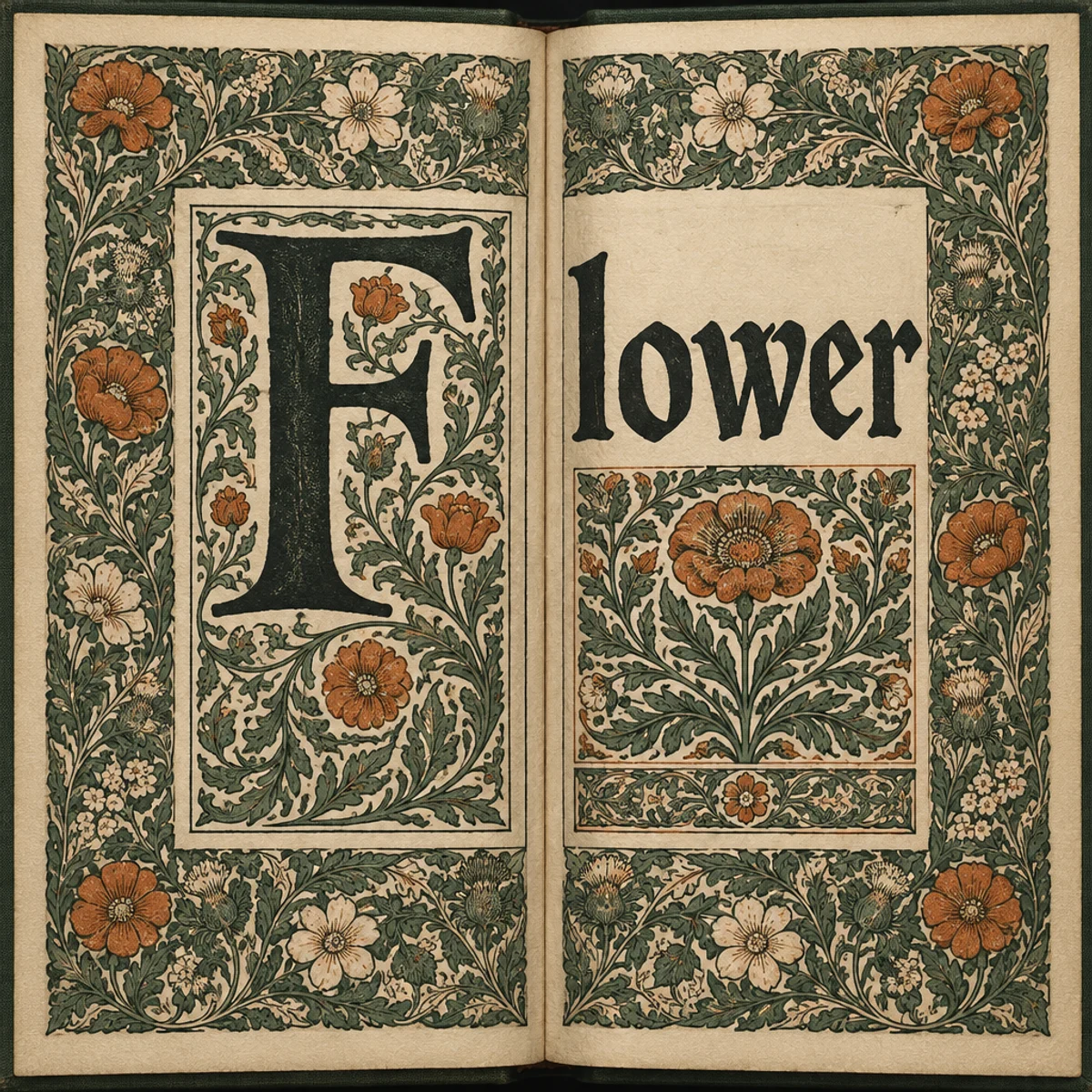
Kelmscott press book design
Compare Kelmscott-inspired book spreads and botanical plate layouts: dense foliate borders, weighty lettering and integrated ornament, with reusable prompts.
Make
Kelmscott press book design treatment with dense botanical borders, weighty historic letterforms, and integrated page ornament.
A starting point: add your own subject or details in your image tool.
An original generated example of this visual direction.
Automated image review only; results vary by image tool.
About this aesthetic and its examples
Compare more directions
Explore other approaches for this kind of project.



Look closer: traits and nearby styles →
About this example
This image may have used extra directions. The seed above is a reusable starting point and may produce a different result.
- Created with
- OpenAI Image API
- Model
- gpt-image-2.5-flare
- Generated
- 2026-10-17
How to use this promptRead as Markdown
Let ornament organize the page
Compare how a dense border relates to a page’s central field. Morris designed type, initials and ornament together; a border alone does not make a complete book design.
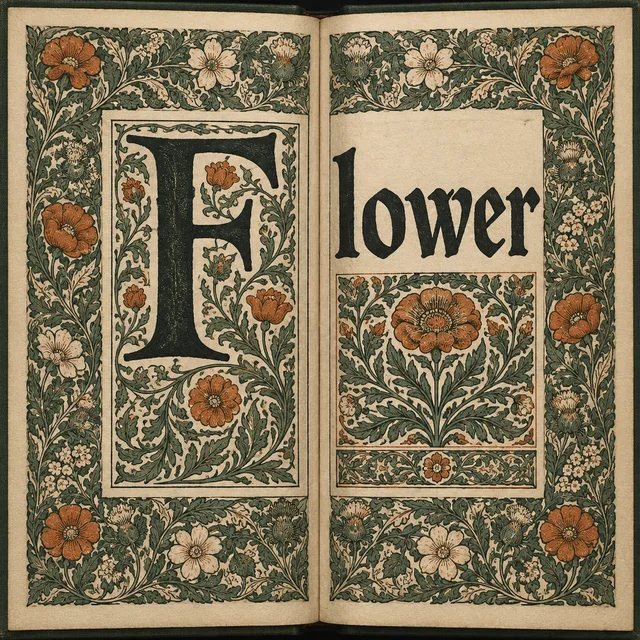
An enclosed book spread
Follow the botanical border around the spread, then compare the visual weight of ornament and central content.
Explore example →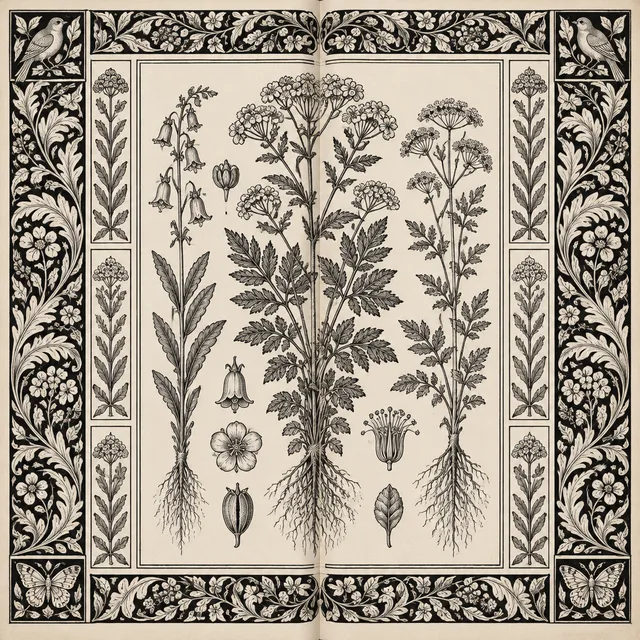
A central botanical plate
A larger central image field and mirrored side ornament create a different reading hierarchy within the same decorative direction.
Explore example →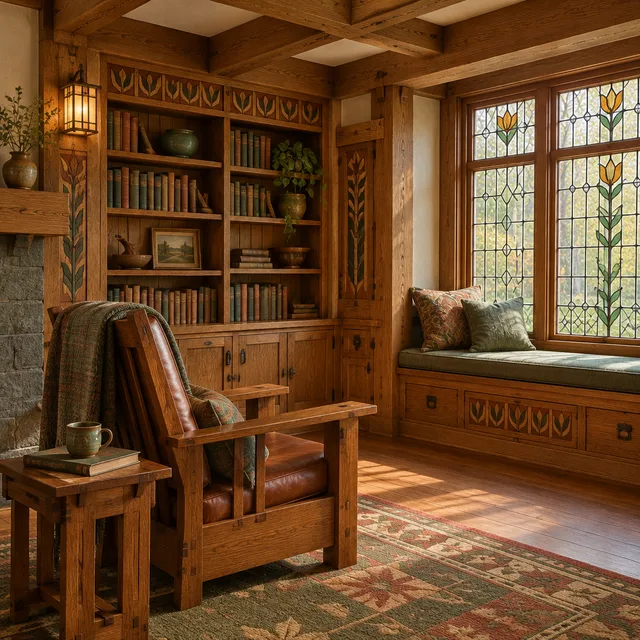
Compare ornament across a room
Arts and Crafts interiors connect botanical motifs with furniture and architecture, extending the relationship between detail and whole into a different medium.
Explore example →Try one change
Keep the page dimensions and central content fixed. Compare a narrower border, a larger initial and more open margin. For a readable publication, set and proofread real text separately; generated letterforms are visual inspiration.
Type and ornament share a page
William Morris designed typefaces, initials, borders and illustration frames for the Kelmscott Press. The V&A describes how these decisions worked together. Compare the weight of the central content with the surrounding botanical ornament, rather than treating decoration as a detachable frame.
The generated book spread encloses its central field in dense foliage. The plate variation gives more space to a central botanical image and organizes ornament into mirrored sides. Try a narrower border or a larger open margin while keeping the central content fixed.
These are AI page-design interpretations, not historical Kelmscott editions or print-ready layouts. Generated lettering is not reliable typesetting. Compose and proofread real text separately, and check margins, resolution and binding requirements for an actual book.
Learn more: V&A: William Morris, literature and book design
Look closer at Kelmscott press book design
Compare Kelmscott-inspired book spreads and botanical plate layouts: dense foliate borders, weighty lettering and integrated ornament, with reusable prompts.
In the original generated example: A fictional book spread with ornate botanical borders and historic-style lettering. Notice which details catch your eye before deciding whether the whole style is for you.
Ask yourself: is it the palette, the surface, the shapes, or the subject you like? Save a favorite and use the visual taste guide to find a useful next direction.