
Liquid glass
Split-stage media controls
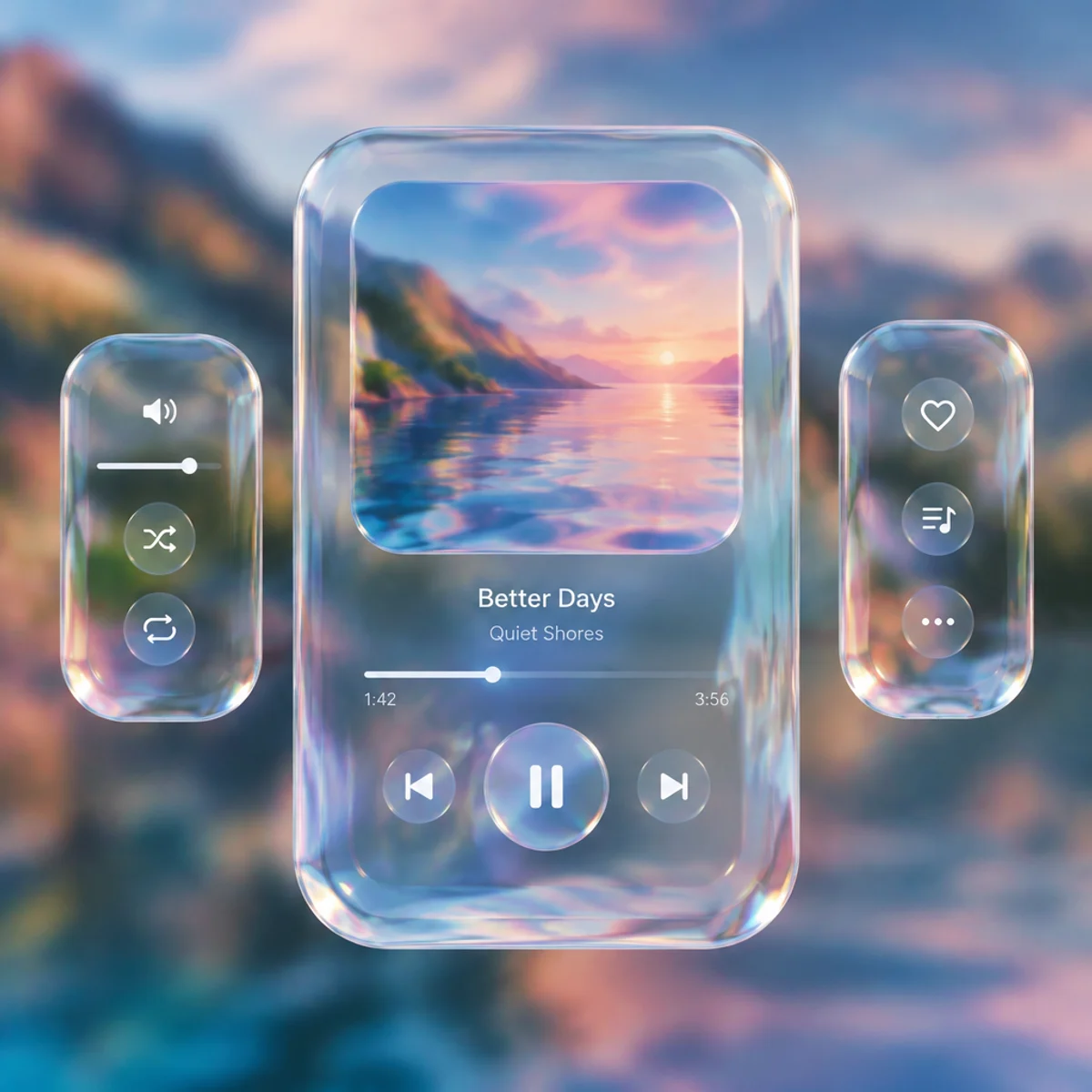
Fictional media-control interface with a centered glass playback stage and secondary side control islands, all refracting the artwork beneath.
Make
Liquid glass-inspired interface treatment with transparent layers, refractive curved edges, specular highlights, localized background distortion and clear visual hierarchy.
This keeps the parent’s refractive translucent language but shifts composition away from a simple navigation bar into a tiered interface. The visible difference is a stronger center-weighted hierarchy and separated control islands, creating a novel editorial media layout without analog hardware cues.
A starting point: add your own subject or details in your image tool.
Compare the arrangement of the shapes and layers, then adapt the seed to your own subject.
A fictional still interface. Labels and timestamps are invented; contrast, interaction, responsiveness and accessibility have not been validated.
About this aesthetic and its examples
Compare more directions
Explore other approaches for this kind of project.
Look closer: traits and nearby styles →
About this example
This image may have used extra directions. The seed above is a reusable starting point and may produce a different result.
- Created with
- OpenAI Image API
- Model
- gpt-image-2.5-flare
- Generated
- 2026-11-04
How to use this promptRead as Markdown
Refraction, beyond background blur
The split-stage media study separates a dominant playback panel from smaller side-control islands. Compare the thick refractive rims and the quieter control areas, then ask whether the secondary controls still feel related to the main panel. The fictional title and times are visual content, not live data.
Bright curved rims, glossy highlights and distorted background details make the controls seem refractive. Glassmorphism more often suggests frosted transparency and blur; compare the edge and background treatment rather than calling every translucent card liquid glass.
These interface images are concepts. None demonstrates moving refraction, working controls, platform compliance or accessible contrast over changing content.
Look closer at Liquid glass
Transparent floating controls use bright refractive rims, glossy highlights, and background distortion for a liquid-glass-inspired interface.
In the original generated example: A mobile music player with colorful portrait artwork, glossy transparent playback buttons, and a floating glass navigation bar. Notice which details catch your eye before deciding whether the whole style is for you.
Explore across projects: Tomorrow feels like this
Ask yourself: is it the palette, the surface, the shapes, or the subject you like? Save a favorite and use the visual taste guide to find a useful next direction.